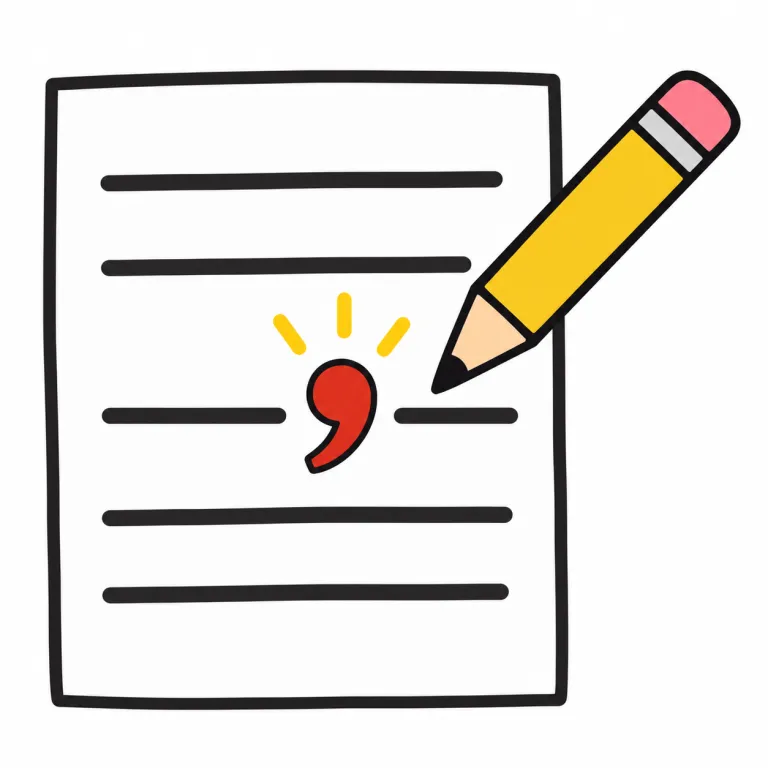
カンマ
解説 Definition
comma は、文中の区切りを示す句読点「カンマ、コンマ」という意味です。日本語のカタカナ語とほぼ同じですが、英語では文法上の区切りやリストの区切りとして特に重要です。
A punctuation mark (,) used to separate items in a list, set off certain words or clauses, and mark grammatical divisions within a sentence. It can clarify structure and meaning but normally does not end a sentence.
覚え方のコツ Memory Tip
comma はギリシャ語 komma「切り取られた部分」に由来し、文を小さく「切る」記号と考えると覚えやすい語です。put a comma after ...、separate items with commas の形で定着させます。period は文を終えるのに対し、comma は文中に区切りを作るだけという違いも重要です。
Connect comma with the idea of cutting a sentence into manageable parts. Its Greek ancestor meant “a piece cut off,” which matches the mark’s role in separating list items, introductory elements, and clauses. Practice common instructions such as put a comma after the city name and separate the items with commas. A comma marks an internal division but normally leaves the sentence continuing; a period ends it. Also distinguish comma from coma: the punctuation word has two m’s, while coma, with one m, is a state of prolonged unconsciousness.
例文
Please put a comma after the city name.
市の名前の後にカンマを入れてください。
A missing comma changed the meaning of the sentence.
カンマが抜けたことで、その文の意味が変わりました。
Use a comma between each item in this list.
このリストでは、それぞれの項目の間にカンマを使ってください。
comma の類義語・関連語
派生語
紛らわしい語
comma の語源・成り立ち Etymology
ギリシャ語komma(切り取られた部分)から、動詞koptein(切る)に由来する。文を「切る」記号という発想。ラテン語を経て英語に入った。関連語:colon(同じく句読点)、syncopation(音の省略、syn+koptein)。
Comma came through Latin comma from Greek komma, “a piece cut off” or a short clause. Komma was derived from koptein, “to cut.” Ancient systems of rhetoric and punctuation used the term for a short segment of speech or writing, and it later became the name of the written mark that separates such segments. The modern punctuation sense preserves the central image of dividing or cutting text into meaningful units.
同じレベルの語彙をもっと
外部辞書で調べる
この英単語をクイズで覚えよう