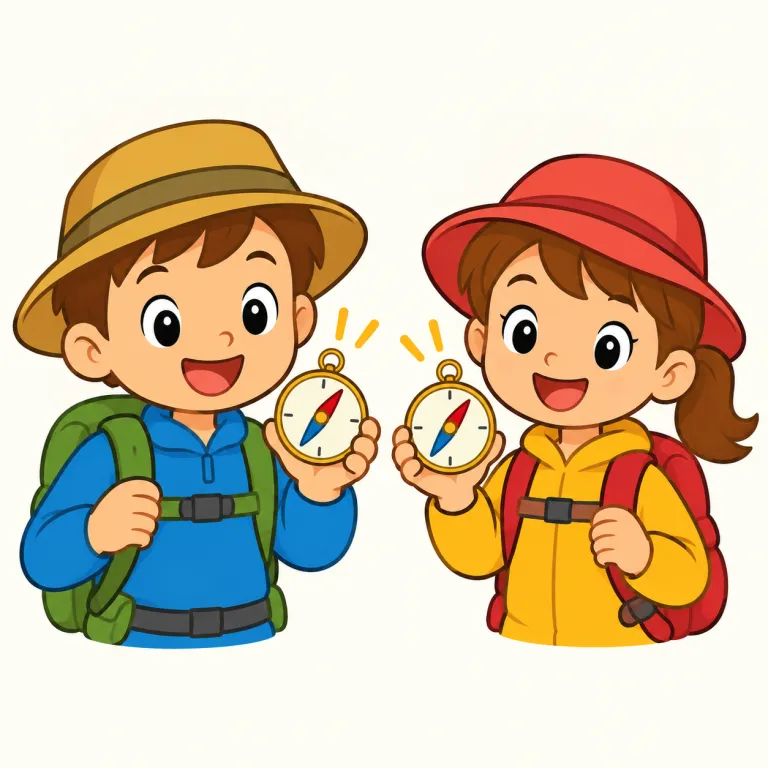
コンパス
解説 Definition
compass の複数形。複数の方位磁針を指すほか、特にイギリス英語では、円を描いたり距離を測ったりする二脚の器具を compasses または a pair of compasses と呼びます。
Compasses is the plural of compass and can refer to instruments that show direction or, especially in British English, tools with two hinged legs used for drawing circles and measuring distances. The drawing instrument is commonly called a pair of compasses.
覚え方のコツ Memory Tip
compasses は compass の規則的な複数形で、語末が -ss のため -es を加えます。発音は /ˈkʌmpəsɪz/ で、語尾に /ɪz/ の音節が増えます。方位を知る羅針盤なら several compasses、円を描く二脚器具なら a pair of compasses という形を典型表現として覚えましょう。
Treat compasses as the regular plural of compass. Because compass ends in -ss, add -es, and pronounce the ending as an extra /ɪz/ syllable: compass, compasses. For navigation, picture several hikers carrying compasses that point north. For geometry, remember the fixed expression a pair of compasses: the two hinged legs open to measure a radius and draw a circle. American English more often calls this drawing tool a compass, while British English commonly uses compasses. Both senses share the historical connection with measuring, enclosing, or tracing a circular range.
例文
The hikers checked their compasses before entering the forest.
ハイカーたちは森に入る前に方位磁針を確認しました。
She used a pair of compasses to draw a circle.
彼女はコンパスを使って円を描きました。
Several compasses were provided for the geometry lesson.
幾何学の授業用にコンパスが数組用意されました。
compasses の類義語・関連語
compasses の語源・成り立ち Etymology
古フランス語 compas(円・測定具)から。ラテン語 com-(共に)+ passus(歩み)が語源で、歩幅で距離を測ることが原義。円を描く道具や方位磁針の意味に発展した。関連語:compass(羅針盤)、encompass(包囲する)。
Compasses is the plural form of compass. Compass entered English through Old French compas, a word associated with a circle, circuit, measure, or measuring instrument. It is historically connected with the idea of measuring together by steps, reflected in Latin elements com-, “together,” and passus, “step.” From circular measurement, the noun developed uses for drawing instruments and later for instruments that indicate direction.
同じレベルの語彙をもっと
外部辞書で調べる
この英単語をクイズで覚えよう