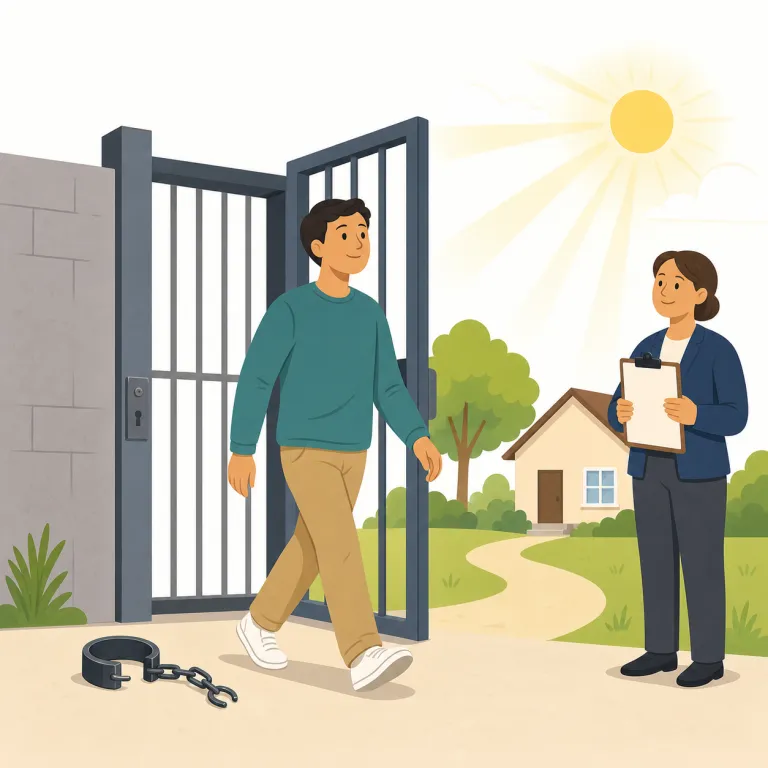
仮釈放
解説 Definition
刑期を満了する前に刑務所から出るための条件付き釈放。仮釈放中の人は特定の条件を守る必要があります。
Parole is the conditional release of a prisoner before the full prison sentence is finished. A person on parole must follow certain rules and can be sent back to prison if they break them. The word is mainly used in legal and criminal justice contexts.
覚え方のコツ Memory Tip
parole は法律・刑務所の場面でまとめて覚えると定着しやすい語です。`be released on parole`、`parole officer`、`violate parole` をセットで押さえると、「条件つきで外に出るが、監督下にあり、違反すれば戻される」という輪郭が見えます。単なる `release` が「解放」全般なのに対し、parole は服役途中の人の条件付き釈放。`probation` は最初から刑務所に入らず監督される場合にも使うので、そこを区別すると混同しにくいです。
Remember `parole` in one legal set: `released on parole`, `parole officer`, and `violate parole`. That group gives you the full picture of conditional freedom under supervision. It is more specific than general `release`, and different from `probation`.
例文
He got parole after five years in prison.
彼は刑務所で5年過ごした後、仮釈放されました。
The parole officer visited him monthly.
保護観察官は毎月彼を訪ねました。
He may return to prison if he breaks parole rules.
仮釈放の規則を破ると、刑務所に戻されることがあります。
parole の類義語・関連語
派生語
紛らわしい語
parole の語源・成り立ち Etymology
フランス語parole『言葉・約束』からで、俗ラテン語paraula、さらにギリシャ語parabole『比較・たとえ話』に由来します。もとは『与えた言葉』なので、捕虜の名誉の誓いを指し、そこから『仮釈放』へ。関連語はparable, parley。
Parole comes from French parole, meaning "word" or "promise." It goes back through Late Latin to Greek parabolē, though in French it came to mean a spoken word given in trust. Because of that, English first used it for a prisoner's or captive's pledged word, and later for release based on that promise; related words include parable and parley.
同じレベルの英単語をもっと
外部辞書で調べる
この単語を英単語クイズで覚えよう