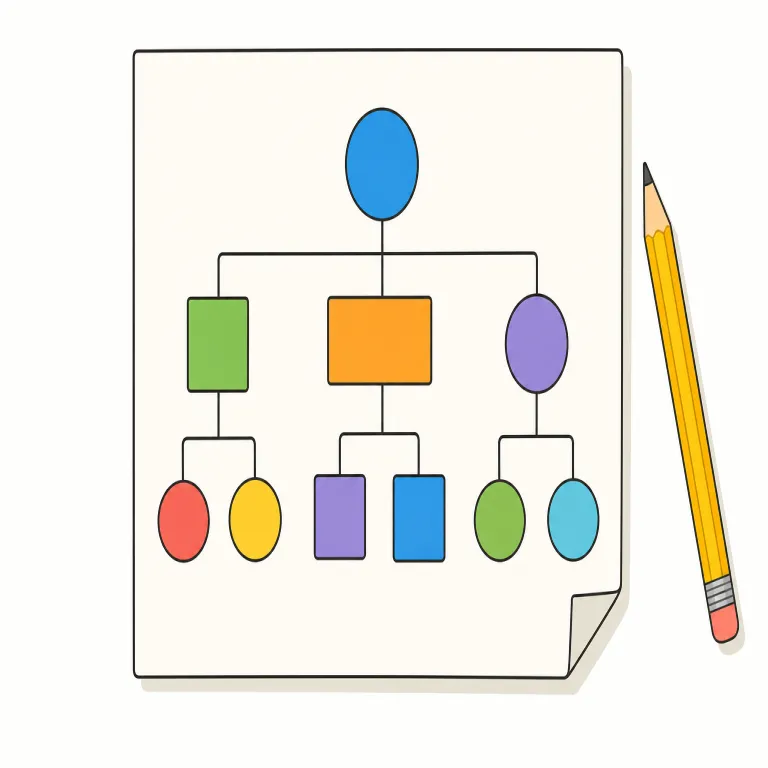
diagram
diagram は英検準1級・TOEIC 730・TOEFL 60・IELTS 5.5レベルの英単語で、「図」という意味があります。発音記号は /ˈdaɪəˌɡræm/ です。
図
解説 Definition
図(ず)とは、複雑な情報や関係を視覚的に表現したもの、または描画や絵を意味します。文字だけでなく、視覚的な表現を用いて理解を促します。
A diagram is a simple drawing that shows how something works, looks, or is arranged. It is commonly used in textbooks, instructions, science, and business presentations. A diagram helps explain ideas visually rather than with long text.
覚え方のコツ Memory Tip
diagram は、文章で順に説明するより、関係を「見える形」にして一気に理解させる語として覚えると残りやすい。flow diagram, block diagram のように、流れ・構造・仕組みを整理して示す場面でよく使う。単なる絵を指す picture と違い、diagram は要素同士のつながりや配置がわかる“説明用の図”という感覚が大事。draw a diagram, label the parts などの形でも覚えると実用的。graph は数値変化、chart は図表全般なので、その違いも一緒に押さえると混同しにくい。
A `diagram` is not just a picture. Think of it as a drawing that shows parts, structure, or connections clearly, often better than a long explanation. It is useful to remember it with phrases like `draw a diagram` or `flow diagram`.
例文
The diagram shows how the system works.
その図はシステムがどのように機能するかを示しています。
The teacher drew a diagram on the whiteboard.
その先生はホワイトボードに図を描いた。
According to the diagram, the process has three steps.
その図によれば、そのプロセスは3つの段階に分けられています。
diagram の類義語・関連語
類義語
紛らわしい語
diagram の語源・成り立ち Etymology
diagram はギリシャ語 diagramma に由来し、dia-「横切って・区分して」+ gramma「書かれたもの」から成る。つまり『線を引いて描き分けたもの』が原義で、言葉だけでなく形で関係を見せるから「図」になる。related: graph, graphic。
Diagram comes from Greek diagramma, built from dia- "across" or "through" and gramma, "something written or drawn." It originally meant a figure marked out with lines. That sense developed naturally into a visual drawing that shows structure or relationships more clearly than words alone.
同じレベルの語彙をもっと
英検準1級の一覧へ →外部辞書で調べる
この英単語をクイズで覚えよう