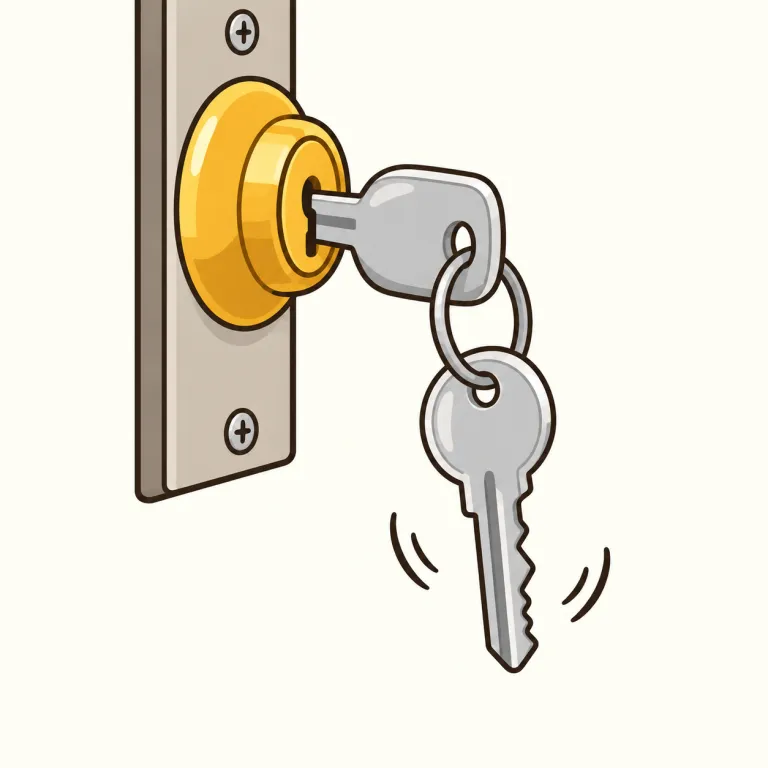
ぶら下がっている
解説 Definition
dangling は dangle(ぶら下がる、ぶら下げる)の現在分詞で、形容詞として「ぶら下がっている」という意味です。ひも・飾り・物などが固定された場所から垂れ下がっている状態を表します。
Hanging down from a point of attachment, often loosely and with the possibility of swinging or moving. It commonly describes objects such as threads, keys, decorations, or lights.
覚え方のコツ Memory Tip
原形 dangle「ぶらぶら下がる」の語末の無音の e を落として -ing を付けた形で、発音の核は原形と同じです。hang が単に「掛かる」状態も表すのに対し、dangling は一端だけが固定され、下に垂れて揺れそうな感じです。a dangling thread、dangling from the lock の場面で覚えましょう。
Start with the verb dangle, meaning to hang loosely, and form dangling by dropping the final silent e before adding -ing; the core pronunciation stays the same. Picture a key attached at one end to a lock, hanging below it and able to swing. That loose, suspended image distinguishes dangling from the broader word hanging, which does not always suggest movement or a free lower end. Useful patterns include a dangling thread, dangling lights, and dangling from a hook. As an adjective, it describes the object’s visible state rather than merely naming an action.
例文
A key was dangling from the lock.
鍵が錠前からぶら下がっていました。
She noticed a dangling thread on her coat.
彼女はコートにぶら下がった糸に気づきました。
The child pointed at the dangling lights above the street.
その子どもは通りの上にぶら下がっている明かりを指さしました。
dangling の類義語・関連語
dangling の語源・成り立ち Etymology
danglingはdangle「ぶらぶら下がる」の現在分詞形で、語源はデンマーク語・スウェーデン語系dangla「揺れ動く」とされる。明確な接頭辞はなく、dangleやdanglyも同系。だから単に下がるのでなく「ぶら下がって揺れる」感じが出る。
Dangling is the -ing form of dangle, created by dropping the final silent e and adding -ing. Dangle appeared in English with the sense of hanging loosely and moving to and fro. It is generally associated with Scandinavian forms such as Danish dangle or Swedish dangla, though its detailed history is not completely certain. The modern word retains the combined ideas of suspension, looseness, and possible swinging.
同じレベルの語彙をもっと
外部辞書で調べる
この英単語をクイズで覚えよう