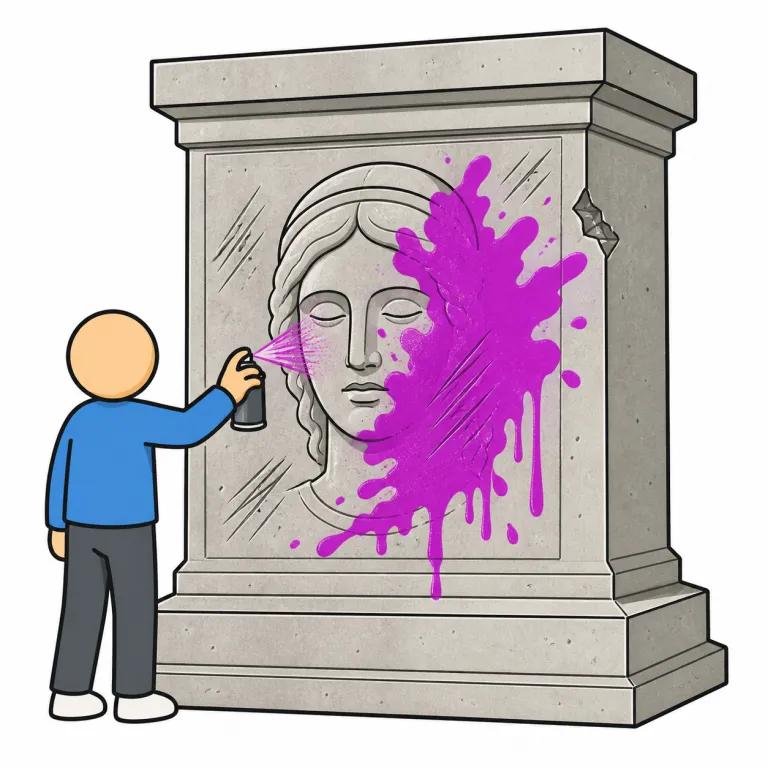
外観を傷つける、汚損する
解説 Definition
defacing は、建物、記念碑、本、看板などの表面や見た目を傷つけ、価値や印象を損なうことを表す語です。単に汚すだけでなく、落書きする、削る、破るなどして外観を台無しにする含みがあります。公共物や文化財の損壊を述べる文脈でよく使われます。
Defacing means damaging the surface or appearance of something, especially by writing on it, marking it, or spoiling it. It is often used for buildings, signs, money, or public property.
覚え方のコツ Memory Tip
deface は face「顔・表面」が核。face を傷つけて見た目をだめにする、と押さえると覚えやすいです。単なる damage よりも「表面・外観を台無しにする」感じが強く、落書き・削る・引っかく場面で出やすい語。deface a wall / monument / book / public property のような組み合わせで覚えると定着します。vandalize に近いですが、こちらは特に見た目を損ねる点に意識が向きます。defacing はその進行中の形です。
See the word "face" inside it. To deface something is to damage its face or surface, so its appearance is spoiled. Remember common pairs like "deface a wall" or "deface a monument" to keep the visual idea strong.
例文
The vandals were caught defacing the historic monument with spray paint.
落書き犯たちは、歴史的な記念碑をスプレーで汚損しているところを捕まった。
Defacing public property is a criminal offense that carries heavy fines.
公共物を汚損することは、高額の罰金を伴う犯罪です。
Someone had been defacing library books by tearing out pages.
誰かがページを破り取って図書館の本を汚損していました。
defacing の類義語・関連語
類義語
紛らわしい語
defacing の語源・成り立ち Etymology
defacing は deface に進行・名詞化の -ing が付いた形です。deface は古フランス語 desfacier に由来し、de-/dis-「離して」+ face「顔・表面」なので、「顔や表面をだめにする」から「汚す・損なう」になりました。関連語は face, efface。
Defacing is the -ing form of deface. Deface came through Old French from a form meaning "to undo the face or surface," built from de-/dis- and face. The idea first was damaging someone's face or an outer surface, and from there it widened to any kind of spoiling or marking; compare face and efface.
同じレベルの語彙をもっと
外部辞書で調べる
この英単語をクイズで覚えよう