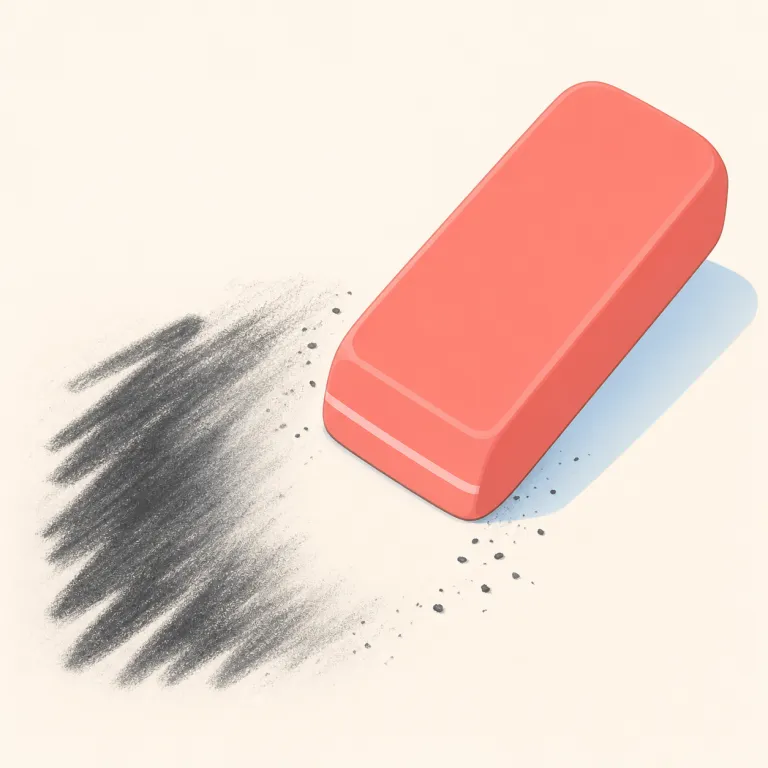
efface
efface は英検1級レベルの英単語で、「消し去る」という意味があります。発音記号は /ɪˈfeɪs/ です。
消し去る
解説 Definition
effaceは跡や記憶、文字などをこすって消す、あるいは忘れさせる動詞で、意図的に過去や刻印を薄めたいときに使われる。自己の存在感を控えめにするという意味で『自己を消す』ような比喩的表現になることもある。
To efface means to erase, remove, or make something disappear. It is a formal word often used for marks, memories, or signs, and sometimes for making yourself less noticeable. It is more common in literary or careful writing than in everyday speech.
覚え方のコツ Memory Tip
face を知っていれば、efface は「顔つきや表面の特徴が分からなくなるほど消す」とつなぐと記憶しやすいです。単なる erase よりも、跡・記憶・印象を薄めて見えなくする感じが強め。efface a memory / efface all traces の形で覚えると実用的です。deface が「傷つけて見た目を損なう」なのに対し、efface は「跡形ごと消す」に寄り、self-effacing なら「出しゃばらず自己を目立たせない」の連想まで広がります。
Notice the `face` inside `efface`. Picture wiping a surface until its visible features disappear. That makes it easier to connect with phrases like `efface a memory` or `efface all traces`, where something is removed so completely that it is hard to see or notice.
例文
She tried to efface the graffiti from the wall.
彼女は壁から落書きをこすり取ろうとした。
He wanted to efface the embarrassing moment from his mind.
彼はその恥ずかしい瞬間を心から消したかった。
Time could not efface the marks on the stone.
時がたっても、その石の跡を消し去ることはできなかった。
efface の類義語・関連語
efface の語源・成り立ち Etymology
effaceはフランス語effacerから入り、語源はex-/e-「外へ」+face「顔・形」にさかのぼる。もとの感覚は「表面の形を外へ消す」で、そこから跡形なく消し去る意になり、関連語にface、defaceがある。
"Efface" came into English from French "effacer." Its deeper roots are in Latin elements meaning "out" and "face" or "surface." The original sense was to remove the visible form from a surface, and that later became the more general idea of wiping out, erasing, or making something disappear; compare "deface."
同じレベルの語彙をもっと
英検1級の一覧へ →外部辞書で調べる
この英単語をクイズで覚えよう