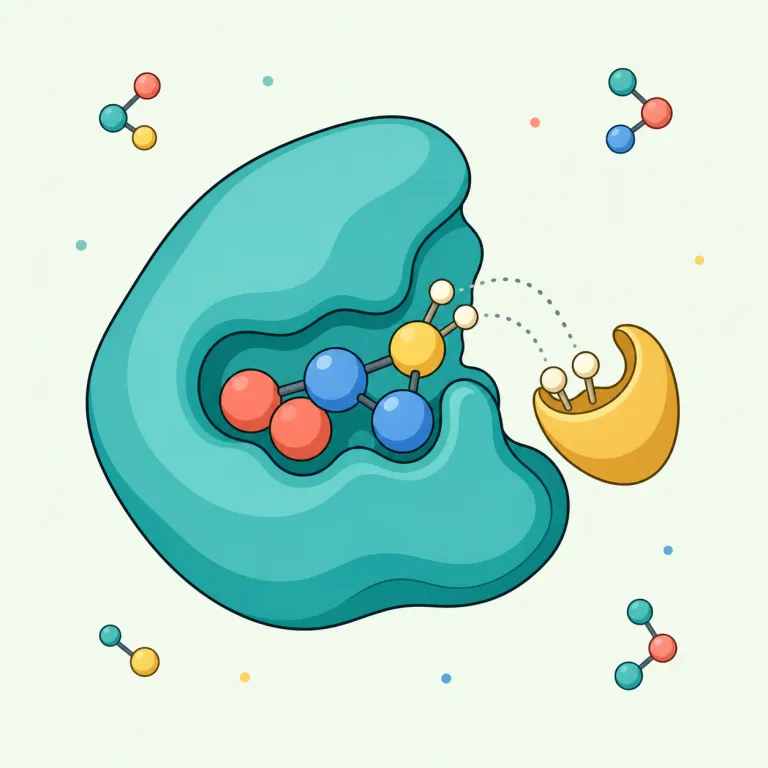
デヒドロゲナーゼ
解説 Definition
脱水素酵素は生物体内の多くの酵素の一種であり、分子から水素を除去する化学反応を触媒します。エネルギー生産に不可欠な酵素クラスです。代謝プロセスで広く機能します。
A dehydrogenase is a type of enzyme that helps remove hydrogen from a substance during a chemical reaction. It is an important term in biology and chemistry, especially when talking about energy production in living things. This is a technical scientific word.
覚え方のコツ Memory Tip
dehydrogenase は de-「外す」+ hydrogen + -ase「酵素」で、まず形を3つに切ると覚えやすいです。英語では -ase が付くと enzyme 名のことが多く、lactase や amylase と同じ仲間。中心は hydrogen なので、「基質から水素を引き抜く酵素」と押さえると意味がぶれません。alcohol dehydrogenase、lactate dehydrogenase のように代謝文脈で頻出し、NAD/NADH や energy production と一緒に見ると定着しやすいです。
Break it into parts: de- + hydrogen + -ase. The ending -ase often signals an enzyme, like in lactase or amylase, so that gives you a strong clue. Remember dehydrogenase as an enzyme that removes hydrogen, often in metabolism words like alcohol dehydrogenase.
例文
Dehydrogenase enzymes play a crucial role in cellular respiration.
脱水素酵素は細胞呼吸に重要な役割を果たします。
Lactate dehydrogenase is an enzyme measured in blood tests.
乳酸脱水素酵素は血液検査で測定される酵素です。
Different types of dehydrogenase catalyze different metabolic reactions.
異なる種類の脱水素酵素は異なる代謝反応を触媒します。
dehydrogenase の類義語・関連語
類義語
dehydrogenase の語源・成り立ち Etymology
dehydrogenaseはde-「取り去る」+ hydrogen + -ase「酵素」。hydrogenはギリシア語hydro-「水」+ -gen「生む」に由来し、hydrogenateやhydroelectricと同じ要素を含むため、「水素を外す酵素」と理解すると働きが見えます。
Dehydrogenase is formed from de-, hydrogen, and the enzyme ending -ase. Hydrogen comes from Greek hydro-, "water," and -gen, "producing," and these parts also appear in words like hydrogenate and hydroelectric. The full word was built in scientific language to name an enzyme that removes hydrogen.
同じレベルの語彙をもっと
外部辞書で調べる
この英単語をクイズで覚えよう