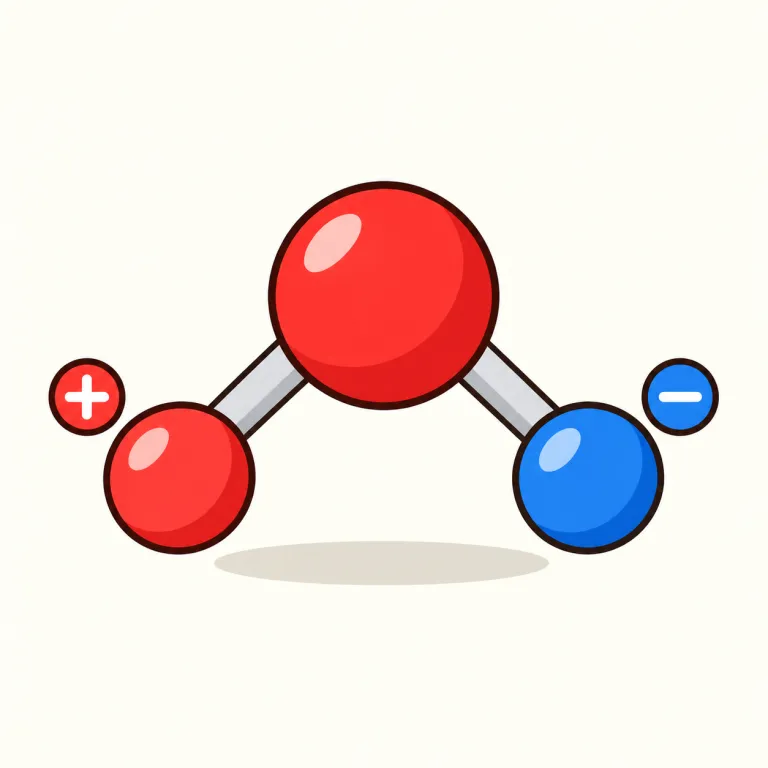
双極性
解説 Definition
双極性。2つの極を持つ、または相反する2つの特性を持つ。
Dipolar describes something that has two opposite poles or two opposite ends. It is often used in physics, chemistry, and electronics when talking about electric charge, magnetic force, or molecular structure. The word usually suggests a clear division into two connected opposites.
覚え方のコツ Memory Tip
まず simpler な parts に分けて覚えると残りやすい。di- は dioxide, divide などで見る「2」、polar は north pole / south pole の pole と同じで「極」。つまり dipolar は「2つの極をもつ」。磁石の両極や、電荷の偏りがある dipolar molecule を思い浮かべると定着しやすい。bipolar も近いが、bipolar disorder の連想が強いので、dipolar は特に“極が二つある構造・性質”に意識を置くと混同しにくい。
Use the parts: `di-` means two, and `polar` comes from `pole`, like the north and south poles. That gives you the picture of something with two poles. It helps to imagine a magnet or a `dipolar molecule`, and to keep it separate from `bipolar`, which many learners connect first with mental health language.
例文
A dipolar molecule has both positive and negative charges.
双極性分子は正と負の電荷の両方を持ちます。
Water is a dipolar solvent due to its asymmetric structure.
水はその非対称構造のために双極性溶媒です。
Dipolar interactions are important in chemistry and physics.
双極性相互作用は化学と物理学で重要です。
dipolar の類義語・関連語
派生語
dipolar の語源・成り立ち Etymology
dipolar は di- + polar。di- はギリシャ語由来で「二つ」、polar はギリシャ語 polos「軸、極」からラテン語 polaris を経た語です。bipolar や polarity と同根で、二つの極が向かい合う像がそのまま「双極性」の意味になります。
Dipolar is formed from di-, meaning "two," and polar. Polar comes through Latin polaris from Greek polos, meaning "axis" or "pole." The word developed from the image of two opposite poles or ends. It is closely related to bipolar and polarity.
同じレベルの語彙をもっと
外部辞書で調べる
この英単語をクイズで覚えよう