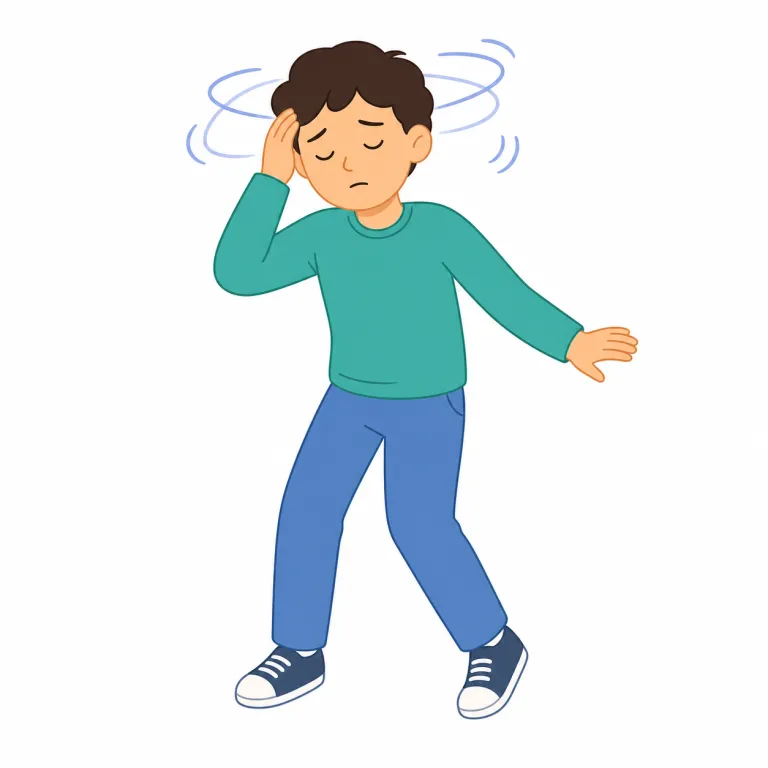
dizziness
dizziness は英検2級レベルの英単語で、「めまい」という意味があります。発音記号は /ˈdɪzinəs/ です。
めまい
解説 Definition
めまいは、周囲が回転して見えたり体がふらついたりして、立っていられなくなることもある感覚です。内耳の異常や血圧変動、低血糖などさまざまな原因で起こります。
Dizziness is a feeling that you are about to fall, lose balance, or that the world is spinning around you. It is commonly used in medical or health contexts to describe a symptom. The word usually describes a physical condition, not a disease itself.
覚え方のコツ Memory Tip
まず形で覚えると定着しやすい語です。dizzy が「目が回る、ふらつく」で、-ness が付くと「その状態」になり、dizziness は「めまいという症状」そのもの。まず feel dizzy を先に覚え、名詞化した形が dizziness だとつなげると整理しやすいです。使用場面では sudden dizziness, slight dizziness, a spell of dizziness などが頻出。nausea は吐き気、faintness は気が遠くなる感じで、dizziness は回転感・ふらつきに意識を置くと混同しにくくなります。
Learn the pair dizzy and dizziness together. Dizzy is the feeling, and -ness turns that feeling into the noun dizziness. Common phrases like feel dizzy and sudden dizziness help fix the pattern. Keep it separate from nausea or faintness.
例文
She suffered from dizziness after spinning around.
彼女はぐるぐる回った後、めまいに襲われました。
The dizziness made it hard for him to walk.
そのめまいのせいで彼は歩くのが難しくなりました。
The patient complained of dizziness and nausea.
その患者はめまいと吐き気を訴えました。
dizziness の類義語・関連語
派生語
紛らわしい語
dizziness の語源・成り立ち Etymology
dizziness は dizzy + -ness で、dizzy は古英語 dysig「愚かな・ぼんやりした」に由来します。頭が鈍って判断が乱れる感覚が、のちに「目が回る」へ移ったのが面白いところです。dizzily や dizzying も同じ語根です。
Dizziness comes from dizzy + -ness. Dizzy goes back to Old English dysig, which meant "foolish" or "stupid." Over time, the sense shifted from a confused or dull state of mind to the physical feeling of being unsteady or having the head spin. Related words include dizzily and dizzying.
同じレベルの語彙をもっと
英検2級の一覧へ →外部辞書で調べる
この英単語をクイズで覚えよう