目がくらむような、目まぐるしい
adjective 形容詞高さ、速さ、成功の度合いなどが極端で、人を圧倒したり当惑させたりする様子を表す。dizzy heightsやdizzy paceのように名詞の前で使われ、本人が身体的なめまいを感じているという意味とは異なる。
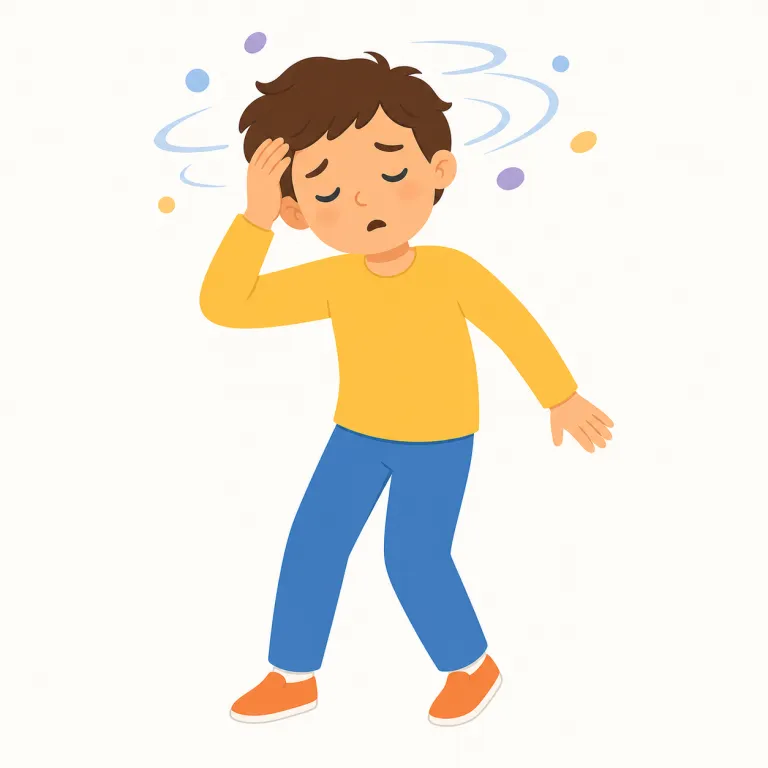
dizzy は英検2級レベルの英単語で、「めまいがする」という意味があります。発音記号は /ˈdɪzi/ です。
めまいがするとは、頭がくらくらして、周囲がぐるぐる回っているように感じる状態を表します。体のバランスが保てなくなり、立っていることが困難になることもあります。疲労、貧血、急激な体の動き、または病気などが原因で起こることがあります。
If you feel dizzy, you feel unsteady, light-headed, or as if the world is spinning. It is usually used for a physical condition caused by illness, tiredness, heat, or sudden movement. It can also describe a short feeling of confusion or weakness.
dizzy は「頭がくらくらして、感覚がぐるぐるする」ときの基本語。spin(回る)や whirl(渦巻く)場面と結びつけると覚えやすく、 If you spin too fast, you feel dizzy. の形が典型です。get dizzy / feel dizzy / make someone dizzy が頻出。眠い sleepy でも、気分が悪い sick でもなく、「平衡感覚が乱れる」感じが中心。景色・高さ・忙しさが人を圧倒する比喩でも使われます。
Tie `dizzy` to the image of spinning too fast and losing balance. Useful patterns like `feel dizzy` and `get dizzy` are very common, so memorize the word inside those chunks. It is not the same as `sleepy` or `sick`; the key image is a head that feels like it is turning.
She felt dizzy after spinning around in circles with the children at the park.
公園で子どもたちと一緒にぐるぐる回った後、彼女はめまいを感じた。
He became dizzy when he stood up too quickly from his chair.
椅子からあまりにも急に立ち上がったため、彼はめまいがした。
The patient reported feeling dizzy and nauseous after taking the new medication.
患者は新しい薬を服用した後、めまいと吐き気を感じると報告した。
文脈によって、次の意味でも使われます。
高さ、速さ、成功の度合いなどが極端で、人を圧倒したり当惑させたりする様子を表す。dizzy heightsやdizzy paceのように名詞の前で使われ、本人が身体的なめまいを感じているという意味とは異なる。
dizzy は古英語 dysig「愚かな・ぼんやりした」に由来し、ゲルマン系の古い語感では頭が働かず混乱した状態を表した。のちに「頭がくらくらして判断が鈍る」感覚へ移り、dizzying や dizziness にもその流れが見える。
Dizzy comes from Old English dysig, which meant "foolish" or "stupid." In early Germanic use, it described a confused or mentally unclear state rather than physical spinning. Later, the meaning shifted toward feeling light-headed or unsteady, while still keeping the idea of mental confusion. Related forms include dizziness and dizzying.
この英単語をクイズで覚えよう