浮かれ気分、はしゃぎ
noun 名詞強い喜びや興奮のために、落ち着きを失って浮かれている状態も指します。一時的で、やや子どもっぽく軽率な言動を伴うニュアンスがあり、身体的な「めまい」とは区別されます。
回転やバランスの喪失による目まい感覚。不安定さから生じるふらふらした感覚や気分。
Giddiness is the feeling of being dizzy, light-headed, or unable to keep your balance. It can also mean a silly, excited state in which someone does not think seriously. The physical meaning is common in health contexts, while the emotional meaning is used for mood or behavior.
dizzy を知っていれば近い感覚で覚えやすい語です。giddy は「目が回るほどふらふらする」「興奮して浮つく」で、そこに -ness が付いて「その状態」= giddiness。まず feel giddy, get giddy をセットで覚えると定着しやすいです。物理的なめまいにも、うれしさや緊張で頭がくらくらする感じにも使えるのがポイント。dizziness よりやや感覚的・感情的に響くことがあり、giggly(笑って落ち着かない)とは別語だと切り分けておくと混同しにくくなります。
Start from `giddy`, then add `-ness` for the state. `Giddiness` can be physical, like feeling dizzy, but it can also be emotional, like excitement making you light-headed. Remember easy pairs like `feel giddy` and `a sense of giddiness`.
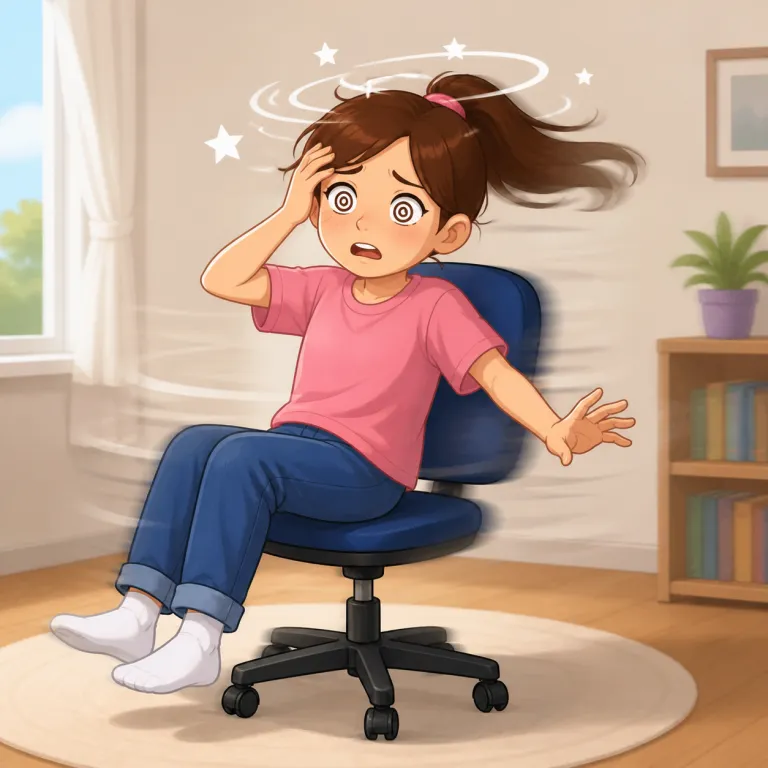
She experienced a moment of giddiness after spinning rapidly on the chair.
彼女は椅子に座って勢いよく回った後、一瞬めまいがした。
The medication caused giddiness as one of its common side effects.
その薬は一般的な副作用としてめまいを引き起こした。
Standing on the tall cliff brought both fear and giddiness.
高い崖の上に立つと、怖さとめまいを感じた。
文脈によって、次の意味でも使われます。
強い喜びや興奮のために、落ち着きを失って浮かれている状態も指します。一時的で、やや子どもっぽく軽率な言動を伴うニュアンスがあり、身体的な「めまい」とは区別されます。
giddiness は giddy + -ness で、「ふらふらした状態」を表す名詞です。giddy は古英語 gidig / gydig「正気でない・霊に取りつかれたような」に由来し、頭が混乱する感覚から後に「めまい」の意味へ寄ったため、giddiness は「くらくら感」を表します。関連語は giddy, dizzy。
Giddiness is giddy plus the noun ending -ness. Giddy comes from Old English gidig, which meant something like "mad," "confused," or "possessed." The idea of mental confusion later shifted toward physical unsteadiness and dizziness. It is close in meaning and history to dizzy.
この英単語をクイズで覚えよう