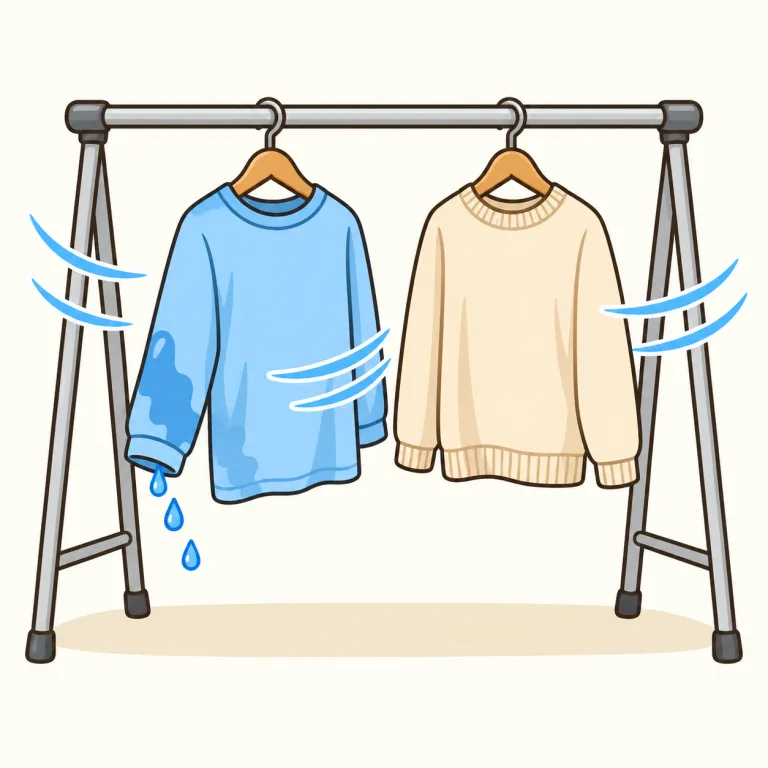
乾燥
解説 Definition
drying は dry(乾かす、乾く)の動名詞・現在分詞です。名詞としては「乾燥」や「乾かすこと」を表し、洗濯物、食べ物、塗料などに使えます。
Drying is the process of removing moisture from something or allowing it to lose moisture. As a noun, it can refer to making clothes, food, paint, or another material dry, as well as the time or conditions involved in that process.
覚え方のコツ Memory Tip
drying は原形 dry に -ing を付けた形で、y を変えず dry+ing と書き、通常 /ˈdraɪ.ɪŋ/ と2音節で発音します。ここでは名詞として「乾燥・乾かすこと」を表し、drying clothes、the drying of paint、drying time のように使います。r のない dying「死ぬこと」と綴りを混同しないようにしましょう。
Form drying by adding -ing directly to dry: keep the y, producing dry + ing. It is commonly pronounced /ˈdraɪ.ɪŋ/, with the sounds of dry and -ing remaining perceptible. Here it functions as a noun naming the process of losing or removing moisture. Learn it through practical combinations such as drying clothes, the drying of paint, drying time, and air drying. Good airflow speeds up drying because it helps moisture leave the material. Be careful not to omit the r: dying comes from die and refers to death, so it has a completely different meaning.
例文
Drying takes about two hours.
乾燥には約2時間かかります。
The drying of the paint was slow.
ペンキの乾燥は遅かったです。
Good air flow helps with drying clothes indoors.
空気の流れがよいと、室内で服を乾かすのに役立ちます。
drying の類義語・関連語
drying の語源・成り立ち Etymology
古英語 dryge(乾いた)にさかのぼるゲルマン系の語で、動名詞語尾 -ing が付いた形。語根は印欧祖語 *dreug-(乾く)に由来する。関連語に drought(干ばつ)、drain(排水する)がある。水分が「抜け去る」という原義から乾燥の意味が生まれた。
Drying is formed from dry and the English suffix -ing, which creates participles and verbal nouns. Dry goes back to Old English dryge and belongs to the Germanic vocabulary of English. Its deeper history is commonly connected with an Indo-European root concerning dryness. In modern formation, dry keeps its final y before -ing. The noun drying therefore literally names the action or process by which something becomes dry or is made dry.
同じレベルの語彙をもっと
外部辞書で調べる
この英単語をクイズで覚えよう