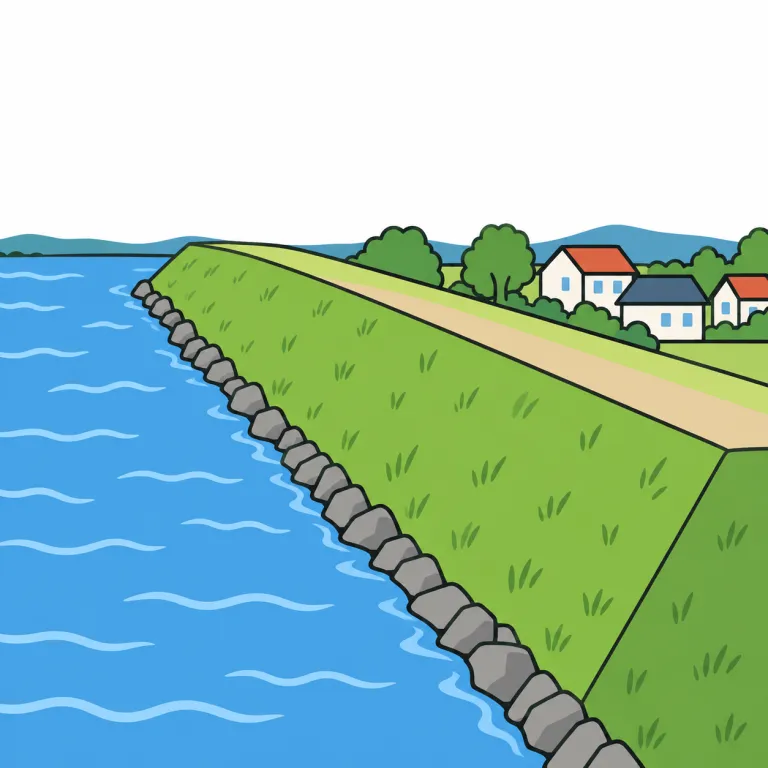
堤防
覚え方のコツ Memory Tip
英国式つづり dyke は、米国式で一般的な dike と同じ「堤防」です。ditch「溝」と同根で、溝を掘った土が隣に積み上がって土手になる場面を思い浮かべると、歴史的に「溝」と「堤防」の両義が生じた関係を覚えられます。人を指す俗語には侮蔑的用法があるため混同に注意しましょう。
Connect dyke with ditch by imagining workers digging a ditch and piling the removed earth beside it. The hollow is the ditch, while the raised earth can become a dyke that holds back water. This picture explains why related historical forms could refer to either a trench or a bank. Dyke is chiefly the British spelling; dike is common in American English. In geographical and engineering contexts, look for collocations such as build a dyke, reinforce a dyke, or a sea dyke. Be aware that the same spelling also occurs in slang about people and can be offensive.
dyke の類義語・関連語
dyke の語源・成り立ち Etymology
古ノルド語 díki(溝)または中低地ドイツ語 dīk(堤防)に由来し、古英語 dīc(溝・土手)を経て定着した。同根語に ditch(溝)がある。元は「掘った溝」の意味だったが、掘り出した土で作る「土手・堤防」の意味も生じた。溝と堤防という正反対の意味を一語が持つ珍しい例である。
Dyke developed from Old English dīc, a word that could denote a ditch or an earthwork, and was reinforced by related Scandinavian and Low German forms, including Old Norse díki and Middle Low German dīk. The two meanings are physically connected: earth dug from a trench can form a raised bank beside it. Ditch is a related English word. The spelling dike represents the same noun and is especially common in American English.
同じレベルの語彙をもっと
外部辞書で調べる
この英単語をクイズで覚えよう