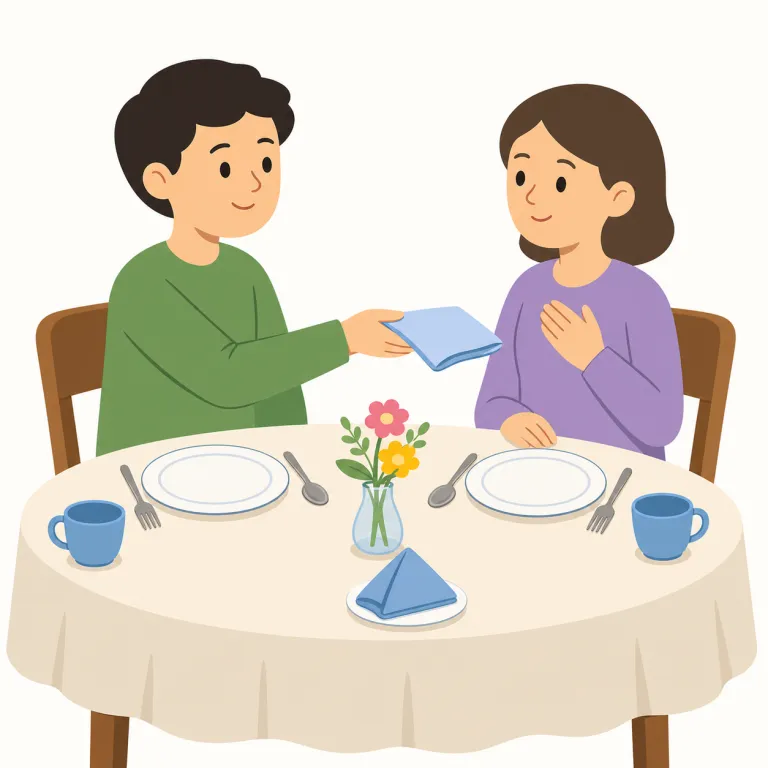
エチケット
解説 Definition
エチケットは社会や特定の場面において守るべき礼儀作法や行動基準を指す。食事の席や職場、社交の場など、状況に応じたふさわしい振る舞いのルールを含む。文化や時代によって異なるが、他者への敬意と配慮が基本となる。
Etiquette is the set of polite rules and expected behavior in social situations. It is used for areas such as dining, business, ceremonies, and online communication. Etiquette can be different depending on the culture, group, or situation.
覚え方のコツ Memory Tip
すでに日本語の「エチケット」で親しみがある語だが、英語の etiquette は単なる清潔感ではなく、食事・仕事・社交などその場にふさわしい礼儀作法全体を指す。manner(s) と近いが、etiquette は「場面ごとの正式な振る舞いの型」を意識しやすい。table etiquette, business etiquette, social etiquette のような組み合わせで覚えると定着しやすい。good etiquette / bad etiquette も頻出。
Remember `etiquette` as the set of social rules for the situation, not just general kindness. It is close to `manners`, but more about proper behavior in a specific context. Strong collocations like `table etiquette` and `business etiquette` help it stick.
例文
Good table etiquette includes not talking with your mouth full.
食事の礼儀作法として、口に食べ物を入れたまま話さないことが含まれる。
Business etiquette varies significantly between different countries and cultures.
職場での礼儀作法は国や文化によって大きく異なる。
She learned proper etiquette before attending the formal dinner party.
彼女は正式な晩餐会に出席する前に、適切な礼儀作法を学んだ。
etiquette の類義語・関連語
etiquette の語源・成り立ち Etymology
フランス語 étiquette から入り、もとは「札・貼り紙・ラベル」という意味でした。宮廷で作法を書いた札を指したことから「礼儀作法」へ意味が広がり、ticket も同じ古仏語系の仲間なので、ふるまいの“表示札”と考えると納得できます。
Etiquette came into English from French étiquette. It first meant a tag, label, or written notice. In royal courts, the word was used for cards or notes that showed proper forms of behavior, and from there it came to mean rules of polite conduct. Ticket comes from the same French family of words.
同じレベルの英単語をもっと
外部辞書で調べる
この単語を英単語クイズで覚えよう