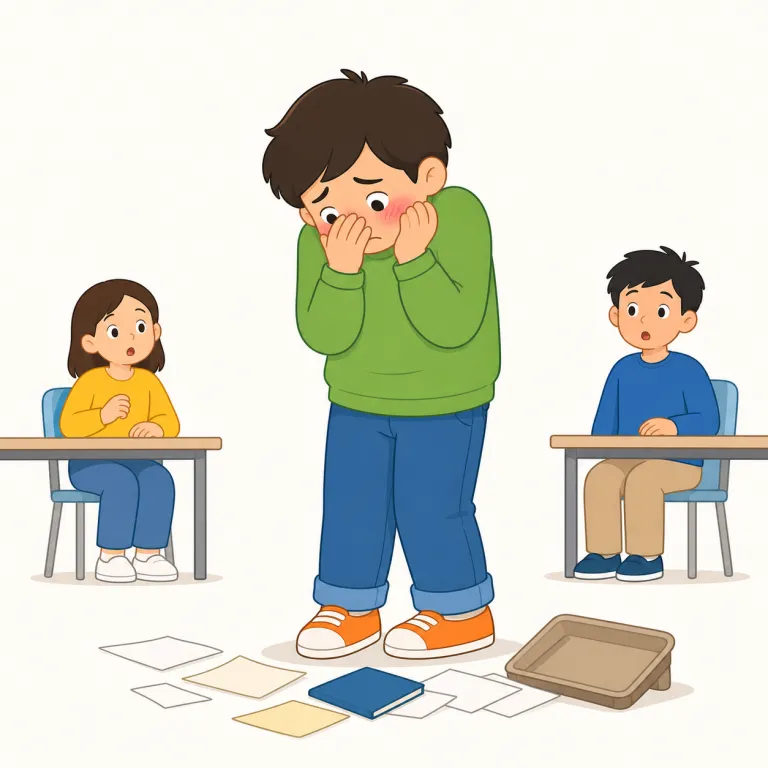
embarrassing
恥ずかしい
解説 Definition
人に恥ずかしい思いをさせるような、または気まずくさせるような様子を表す形容詞です。恥ずかしく感じている本人を言うときは embarrassed を使います。
Embarrassing describes something that makes you feel shy, uncomfortable, or ashamed in front of other people. It is used for situations, mistakes, or comments that cause this feeling. The word describes the thing that causes the feeling, not the person’s emotion itself.
覚え方のコツ Memory Tip
embarrassing は embarrass(恥ずかしい思いをさせる)から考えると、「恥ずかしさの原因になる」と覚えられます。自分が恥ずかしい気持ちなら embarrassed、失敗や写真や質問が人を恥ずかしくさせるなら embarrassing です。an embarrassing mistake, an embarrassing silence, an embarrassing question のように、原因になるものと結びつけて覚えると使い分けやすいです。
Use the `-ing` and `-ed` pattern: `embarrassing` causes the feeling, and `embarrassed` receives it. So an `embarrassing mistake` makes you feel `embarrassed`. This is a very reliable memory hook.
例文
Making a grammar mistake in class was embarrassing.
授業中に文法を間違えて恥ずかしかった。
He found the situation embarrassing and wanted to leave immediately.
彼はその状況を気まずく感じ、すぐに立ち去りたいと思った。
My friend put the embarrassing photo online.
友達がその恥ずかしい写真をネットに載せた。
embarrassing の類義語・関連語
embarrassing の語源・成り立ち Etymology
embarrassing はフランス語 embarrasser「ふさぐ、妨げる」からで、さらにイタリア語 imbarrare「横木で塞ぐ」に由来します。en-/em-「中へ」+ bar「棒・障害」の感覚から、「身動きが取れず気まずい」が今の意味になり、bar や barrier が同根語です。
Embarrassing comes from French embarrasser, "to block" or "to hinder," probably influenced by Italian imbarrare, "to bar in" with rods or bars. The root idea is being obstructed or trapped by a barrier. From physical blockage, the meaning shifted to mental or social discomfort, as if a person cannot move freely or act naturally. It is related to bar and barrier.
同じレベルの語彙をもっと
外部辞書で調べる
この英単語をクイズで覚えよう