河口の
解説 Definition
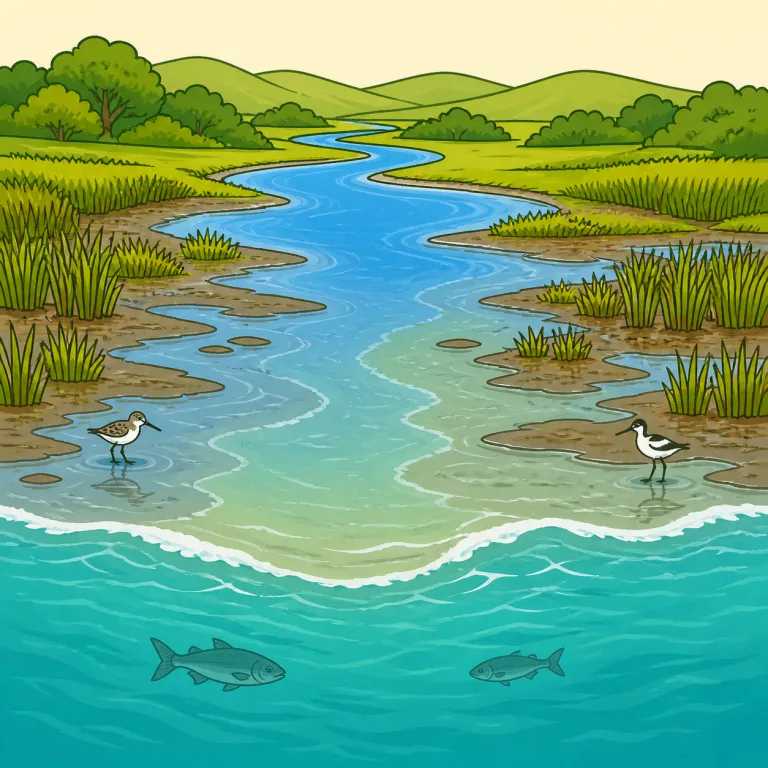
河口の地域に関連した。海と川が出会う汽水域の特性を持つ場所。潮の満引きの影響を受ける沿岸地域。
Estuarine means related to an estuary, the area where a river meets the sea. It is often used in biology, geography, and environmental science. The word describes the special natural conditions, animals, plants, or water systems found there.
覚え方のコツ Memory Tip
まず名詞 estuary「河口」を押さえ、estuarine はそのまま「河口の〜」という形容詞だと覚えるとよいです。marine が「海の」、riverine が「川の」なら、estuarine は海と川が混ざる中間地帯の語。estuarine ecosystem, estuarine waters のように、水域・生態系・沿岸環境と結びつきやすい語です。単に coastal「沿岸の」よりも、潮の影響を受ける汽水の河口らしさまで含むのがポイントです。
Notice the beginning `estu-`, from `estuary`. If you learn `estuary` first, `estuarine` becomes the adjective form used in science and geography. Remember set phrases like `estuarine wetlands` and `estuarine ecosystem`.
例文
The estuarine ecosystem supports diverse species adapted to brackish water.
河口の生態系は汽水に適応した多様な種を支える。
These estuarine wetlands are crucial habitats for migratory birds.
これらの河口の湿地帯は渡り鳥にとって重要な生息地である。
The estuarine region experiences significant tidal fluctuations throughout the day.
河口地域では、1日を通して潮位が大きく変動する。
estuarine の類義語・関連語
対義語
派生語
紛らわしい語
estuarine の語源・成り立ち Etymology
estuary「河口」の形容詞形で、語源はラテン語 aestuarium「潮の満ち引きする入り江」。その元の aestus は「熱、うねり、潮」を表し、海と川の水がゆれ動き交わる場所だから「河口の」という意味になる。関連語は estuary, estivate。
Estuarine comes from estuary, which goes back to Latin aestuarium, meaning a tidal inlet or flooded shore. Its deeper root is aestus, a word for heat, surge, or tide. The sense grew from the movement of swelling water to the place where river and sea waters meet. Related words include estuary and estivate.
同じレベルの語彙をもっと
外部辞書で調べる
この英単語をクイズで覚えよう