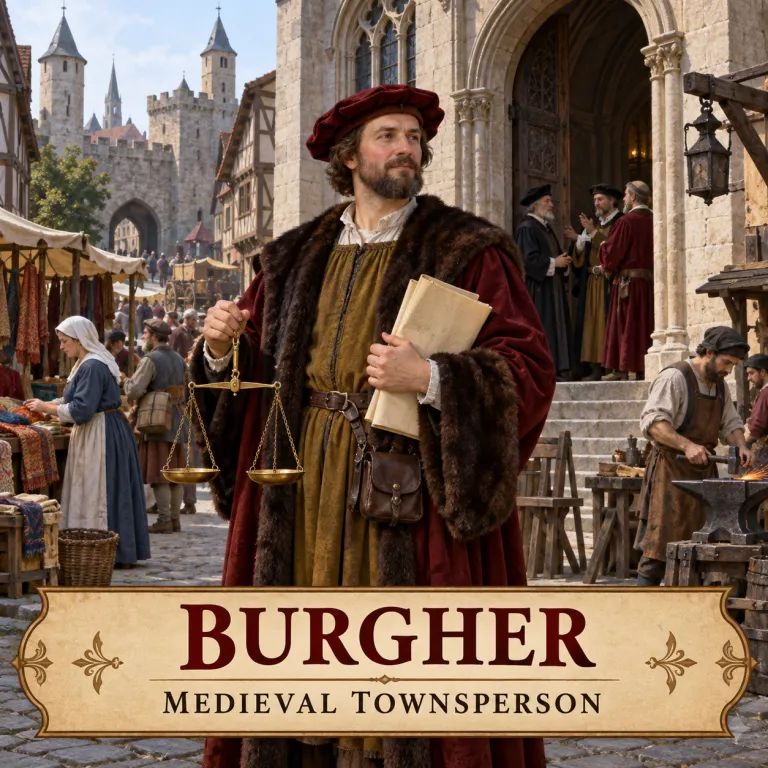
市民・町人
解説 Definition
町や都市の住民や市民。特に中世ヨーロッパでは自由民や商人階級の市民を指した。
A burgher is a citizen of a town or city, especially in older European history. It often refers to a person from the middle class, such as a merchant or tradesman. The word is mainly historical and not common in everyday modern English.
覚え方のコツ Memory Tip
burgher は borough や Hamburg, Pittsburgh などに見える burg/burgh「町・都市」の仲間として覚えると定着しやすいです。-er は「その人」なので、まず直感的には『町の人』。ただし単なる resident より、歴史文脈では medieval burghers, wealthy burghers のように、町で権利や財産を持つ市民・商人層を思い浮かべるとぶれません。bourgeois と並べると『都市の市民階級』のニュアンスがつかめます。burger とつづりが近いので混同注意。
Connect `burgher` with words like `borough`, `Hamburg`, or `Pittsburgh`, where `burg/burgh` suggests a town or city. Then `-er` gives you `a town person`. It often appears in history, so think of rich or important town citizens, and do not mix it up with `burger`.
例文
The burghers of the medieval town had significant political influence.
中世の町の市民は大きな政治的影響力を持っていた。
As a burgher, he was entitled to certain civic rights.
市民である彼には、一定の公民権が認められていた。
The burghers established a guild to protect their trading interests.
市民たちは商業利益を保護するために同業組合を設立した。
burgher の類義語・関連語
burgher の語源・成り立ち Etymology
burgher は burgh「城壁都市・自治市」+ -er「そこに属する人」で、中世オランダ語・ドイツ語系の語です。burgh は「高い場所・砦」を表す語根にさかのぼり、borough や bourgeois と同根なので、単なる住民でなく「町の市民」という響きが見えます。
Burgher comes from burgh + -er, meaning a person belonging to a town or borough. It comes through Middle Dutch and German forms, from a root meaning a fortified place or high settlement, which also appears in borough and bourgeois. Its sense developed from simply living in a town to being a recognized citizen of it.
同じレベルの語彙をもっと
外部辞書で調べる
この英単語をクイズで覚えよう