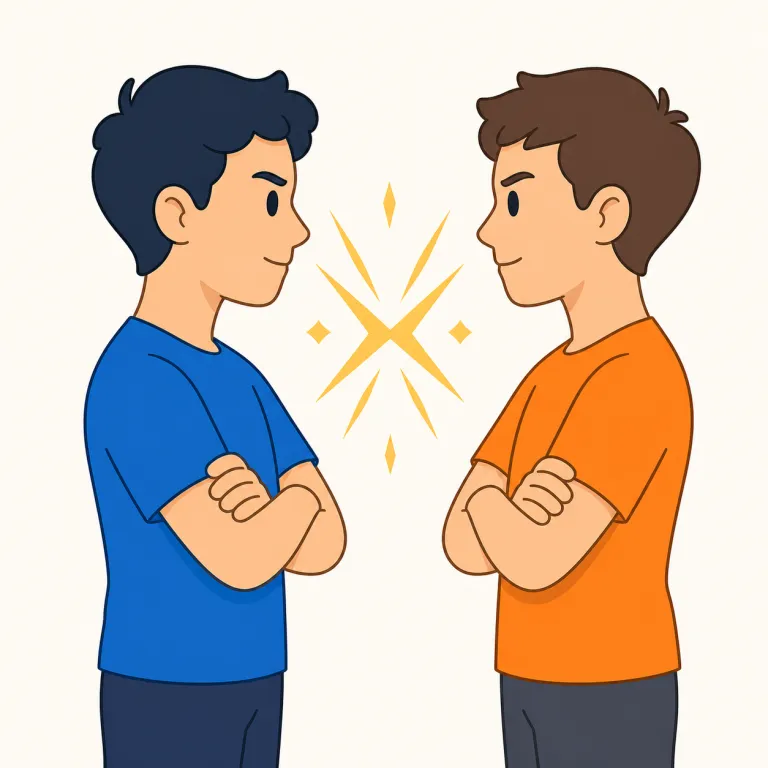
face off
face off は英検準1級レベルの英熟語で、「対決する」という意味があります。発音記号は /ˈfeɪs ˈɔːf/ です。
対決する
解説 Definition
対戦相手や競争相手と真正面から向き合い、対決することを意味します。スポーツ、討論、選挙、ライバル同士の争いなど、互いに張り合う場面でよく使われます。fight ほど物理的な戦いに限られず、緊張感のある対立を表します。
To face off means to compete or confront someone directly. It is often used in sports, debates, or any situation where two sides oppose each other. The phrase suggests a clear and direct contest.
覚え方のコツ Memory Tip
face は「顔」より動詞の「向き合う」を先に思い出すと定着しやすい。face a problem で「問題に立ち向かう」、そこに off が付くと、相手とこちらが少し距離を取りつつ真正面からぶつかる構図になる。スポーツ・討論・ライバル対決でよく使い、face off against ... の形が頻出。meet より緊張感が強く、fight より必ずしも殴り合いではない。名詞の face-off もあり、『避けずに正面勝負する』場面を一枚絵で覚えると残りやすい。
Think of two people standing face to face. `Face off` adds a feeling of direct rivalry, especially in sports, debates, or competitions. It is easy to remember in the pattern `face off against someone`.
例文
The champion will face off against the challenger next week.
王者は来週、挑戦者と対決する。
Before the negotiation, the teams faced off in a tense press conference.
交渉前に、両チームは緊張感のある記者会見で向き合った。
The two finalists will face off on Saturday.
決勝に進んだ二人は土曜日に対決する。
face off の類義語・関連語
face off の語源・成り立ち Etymology
faceは古フランス語face、さらに俗ラテン語facia・ラテン語facies(顔・外見)へさかのぼり、offは古英語由来です。『顔を向け合って離れて立つ』感覚から、向き合って対決する意になりました。関連語はfacial、surfaceです。
"Face" came into English through Old French from Latin facies, meaning appearance or face, while "off" is from Old English. The phrase first suggested people standing face-to-face in opposition. From that physical image, it developed the sense of confronting or competing directly. Related words from the same root include "facial."
同じレベルの語彙をもっと
英検準1級の一覧へ →外部辞書で調べる
この英熟語をクイズで覚えよう