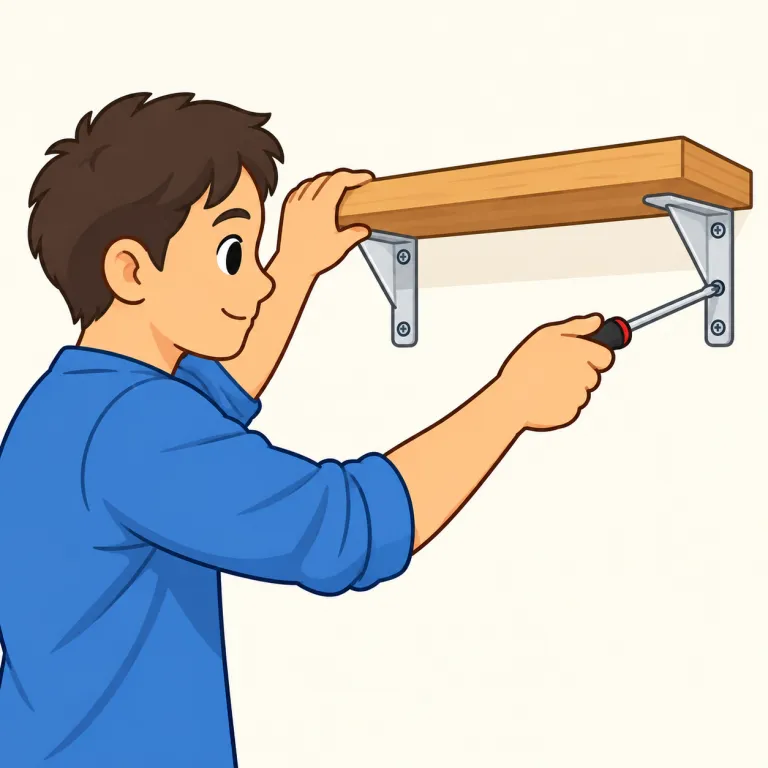
固定する
解説 Definition
fixing は fix(固定する)の現在分詞・動名詞です。ここでは「修理する」ではなく、物を動かないように取り付けたり留めたりする意味で使われます。
Fixing is the present participle or gerund of fix, used here for attaching or securing an object so that it remains firmly in a particular position. It commonly describes fastening something to a surface or fixing it in place.
覚え方のコツ Memory Tip
原形 fix に -ing を加えるだけで fixing となり、x は重ねず、語尾は /ɪŋ/ です。ここでは「修理中」ではなく、fix the shelf to the wall、fix the board in place のように、物を所定位置から動かないよう留める意味です。to や in place と一緒に現れる点を手掛かりに、repairing と区別します。
Fixing is made by adding -ing to fix; do not double the x, and pronounce the ending /ɪŋ/. In this sense, imagine preventing movement: fixing a shelf to the wall, fixing a sign with tape, or fixing a board in place. The patterns fix something to something and fix something in place strongly signal attachment or securing. Although fixing often means repairing in everyday English, that is not the meaning here. Link this sense with fixed, “not moving,” and fixture, something attached in a stable position.
例文
He is fixing the shelf to the wall.
彼は棚を壁に固定しています。
We need strong tape for fixing the sign.
その看板を固定するには強いテープが必要です。
She checked the screws before fixing the board in place.
彼女は板を所定の位置に固定する前にねじを確認しました。
fixing の類義語・関連語
fixing の語源・成り立ち Etymology
fixingはfix+-ingで、fixはラテン語figere「突き刺す・しっかり留める」に由来します。核のイメージは「動かないように打ちつける」で、そこから「固定する」、さらに「修理する」へ広がりました。関連語にfixed、fixtureがあります。
Fixing consists of fix plus the participial suffix -ing. Fix comes ultimately from Latin figere, “to fasten, pierce, or drive in,” through forms associated with Latin fixus, “fastened.” The oldest image is of making something stay firmly in one place. From that central idea came the physical sense of attaching an object, while the familiar sense “repair” developed later from restoring something to a settled or proper condition.
同じレベルの語彙をもっと
外部辞書で調べる
この英単語をクイズで覚えよう