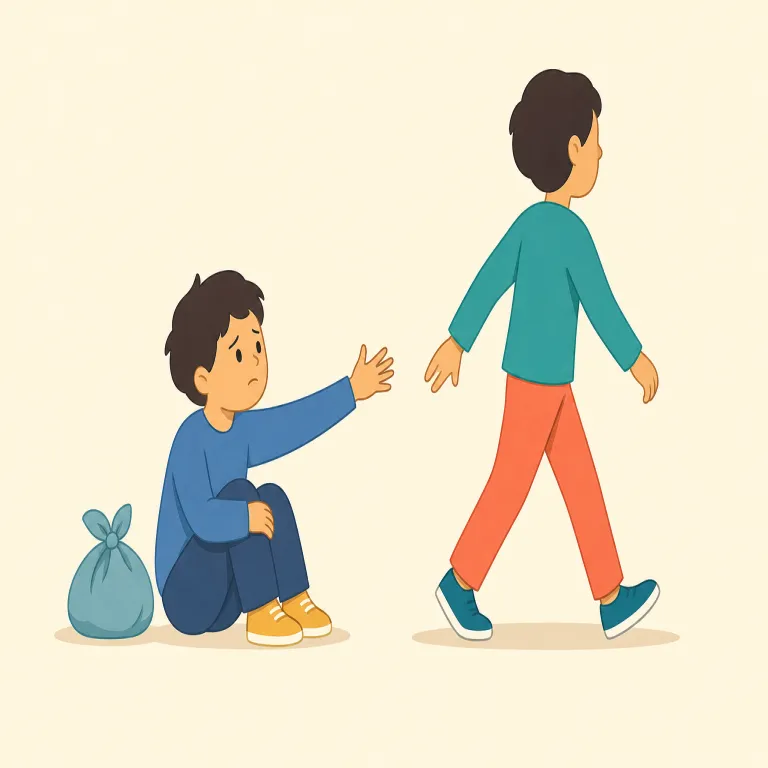
見捨てる
解説 Definition
大切な人や場所を見捨てたり、放棄したりすること。
Forsaking means leaving someone or something completely, or deciding not to support, keep, or follow it anymore. It often suggests a strong or serious choice, especially in emotional, moral, or formal contexts.
覚え方のコツ Memory Tip
forsaking はまず forsake をかたまりで覚える。日常の leave より重く、abandon に近いが、やや文語的で「本来守るべき相手・信念・場所を背いて去る」響きがある。人を置き去りにするだけでなく、duty, faith, family を forsake する形が多い。-ing が付いた forsaking は、その見捨てている行為や「放棄」の場面をそのまま表す形。単なる move away ではなく、責任ごと手放す語だと押さえると残りやすい。
Learn `forsake` as one strong word, heavier than simple `leave`. It often goes with things a person should stay loyal to, like duty, faith, or family. `Forsaking` is the action form, showing that act of turning away and giving something up.
例文
Forsaking his comfortable city life, he moved to a remote village to find peace.
快適な都会の生活を捨て、彼は平穏を求めて辺境の村に引っ越した。
She could not forgive herself for forsaking her family during their time of need.
家族が困っているときに見捨てたことで、彼女は自分を許せなかった。
The monk took a vow of poverty, forsaking all material possessions.
その修道士は清貧の誓いを立て、すべての財産を捨てた。
forsaking の類義語・関連語
類義語
forsaking の語源・成り立ち Etymology
forsaking は forsake + -ing で、forsake は古英語 forsacan「拒む、見放す」に由来し、for-「離れて」+ sacan「責める」から成ります。sake や namesake と遠い同根で、相手との関わりを断つ感覚が核だと知ると、「見捨てる」の重さが見えます。
"Forsaking" is built from the verb "forsake" and the ending "-ing." "Forsake" comes from Old English "forsacan," meaning to reject or renounce, from "for-" meaning away and a root related to "sacan," to dispute or accuse. Over time, the idea shifted from refusing someone or something to leaving them behind completely.
同じレベルの語彙をもっと
外部辞書で調べる
この英単語をクイズで覚えよう