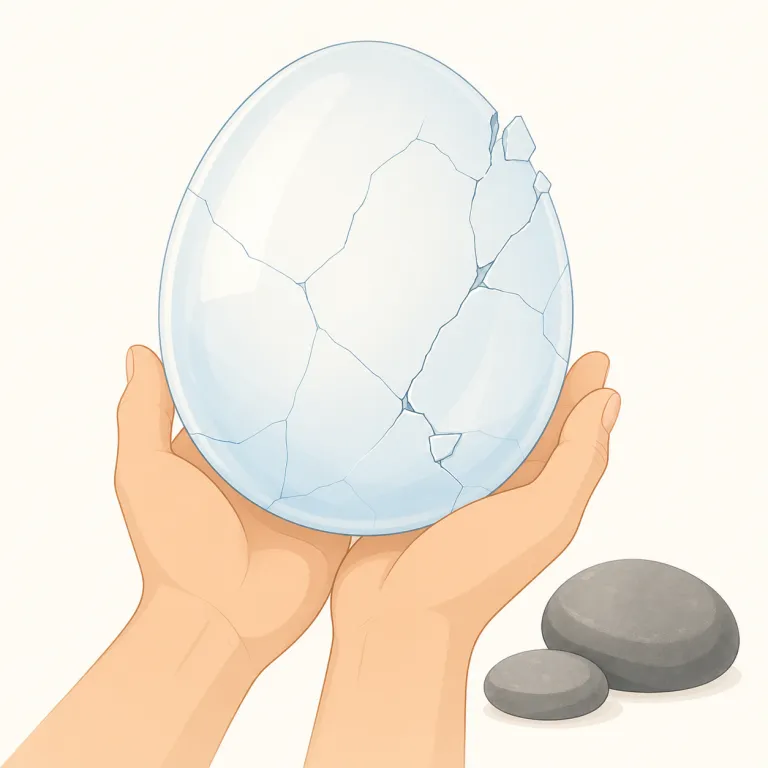
脆弱性
解説 Definition
何かが壊れやすく、簡単に破砕される性質。時間や衝撃に弱く、もろく崩れやすい状態を表す。物理的なものだけでなく、制度や心の状態にも使われ、支えがないとすぐに損なわれる危うさを伴う。
Fragility is the quality of being easily broken, damaged, or harmed. It can describe physical objects, but it is also common for health, emotions, relationships, or systems. The word often suggests that something needs careful handling or support.
覚え方のコツ Memory Tip
fragile(壊れやすい)を知っていれば、fragility はその名詞形で「壊れやすさ」。-ity は quality と同じく「性質」にする語尾なので、形容詞→名詞の変化として覚えると残りやすい。glass のような物だけでなく、system / economy / peace / emotional state など抽象的なものにも使え、「少しの圧力で崩れる感じ」が核。weakness より「もろさ」、vulnerability より「壊れやすい状態」そのものに寄る語。
You may know `fragile` for things that break easily. `Fragility` keeps that idea, but it is often used for bigger things like a system, peace, or the economy. Think of a structure that looks fine but can fail under a little pressure.
例文
The fragility of ancient pottery requires careful handling.
古代の陶磁器は壊れやすいため、慎重に扱う必要がある。
We must acknowledge the fragility of the ecosystem.
生態系の脆弱性を認識しなければならない。
Her fragility belied her inner strength and determination.
彼女の脆さは内なる強さと決意を覆い隠していた。
fragility の類義語・関連語
fragility の語源・成り立ち Etymology
fragility はラテン語 fragilis「壊れやすい」に由来し、その奥には frangere「砕く・折る」がある。つまり「少しの力で折れてしまう性質」が中心で、fragment や fracture も同じ break の語根を受け継ぐ。
Fragility comes from Latin fragilis, meaning "easily broken." That word is linked to frangere, "to break," the same root behind English words like fragment and fracture. The central idea stayed the same: a quality of being easy to break or damage.
同じレベルの語彙をもっと
外部辞書で調べる
この英単語をクイズで覚えよう