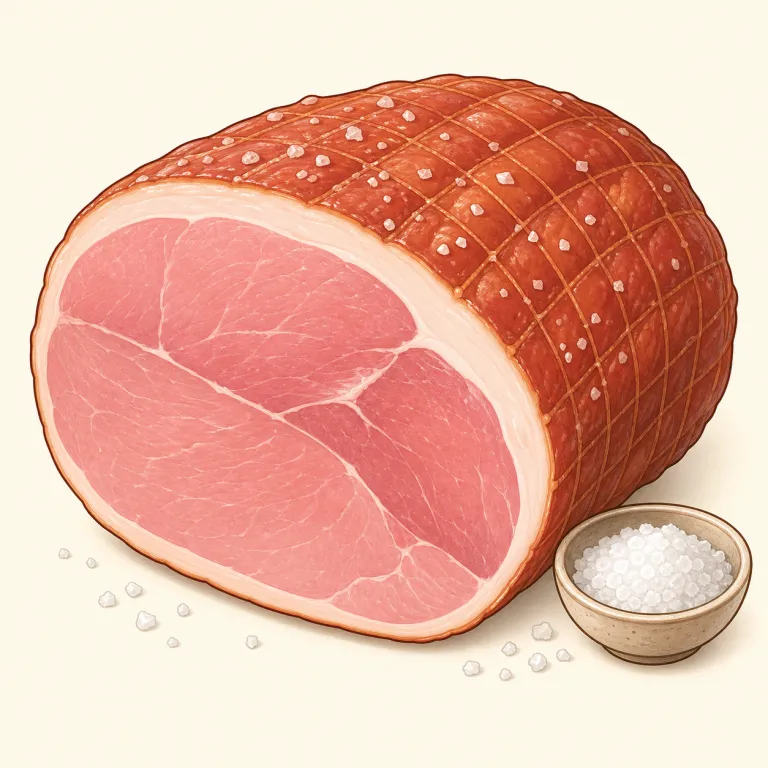
豚の塩漬けもも肉
解説 Definition
gammon は、豚の後ろ脚の肉を塩漬けにした食肉で、燻製されている場合もあります。英国料理でよく使われ、調理してから厚切りやローストで食べられます。
Gammon is a type of meat from the back leg of a pig that has been cured or smoked. It is a common food word in British English. It usually refers to the meat before or after cooking, often served in thick slices.
覚え方のコツ Memory Tip
gammon は英国料理でいう「豚の後ろ脚を塩漬けにした肉」と覚えます。ham と似ていますが、英国での典型的な区別では、gammon は加熱前の塩漬け脚肉を商品や料理材料として呼び、加熱後は ham と呼ばれることが多い点が手掛かりです。smoked or unsmoked gammon「燻製または非燻製のガモン」、roast gammon、gammon steak をまとまりで押さえましょう。厚い一切れを焼き、卵やパイナップルを添えた英国の皿を思い浮かべると、薄切りハムやベーコンとの混同を防ぎやすくなります。
Remember it as a member of the `ham` family. `Gammon` is more specific than `ham`, and it often appears in British food phrases like `gammon steak` or `eggs and gammon`. Thinking of a thick cut of pork in a UK breakfast or pub meal makes it easier to keep separate from bacon.
例文
We had roast gammon for Sunday dinner.
日曜の夕食に豚の塩漬けもも肉のローストを食べました。
The butcher sells smoked and unsmoked gammon.
その肉屋では、燻製した豚の塩漬けもも肉と、燻製していないものの両方を売っています。
Gammon steak is often served with eggs or pineapple.
豚の塩漬けもも肉のステーキは、卵やパイナップルと一緒に出されることがよくあります。
gammon の語源・成り立ち Etymology
gammon は古北フランス語 gambon にさかのぼり、さらに後期ラテン語 gamba「脚」が源です。語幹 gamb-/gam- は「脚」を表し、フランス語 jambe やイタリア語 gamba も同根。豚の脚肉を指したことから、燻製もも肉の名になりました。
Gammon came from Old North French gambon, and ultimately from Late Latin gamba, meaning "leg." The same root appears in French jambe and Italian gamba. Since the word first referred to the leg of a pig, it later became the name of cured ham from that part.
同じレベルの語彙をもっと
外部辞書で調べる
この英単語をクイズで覚えよう