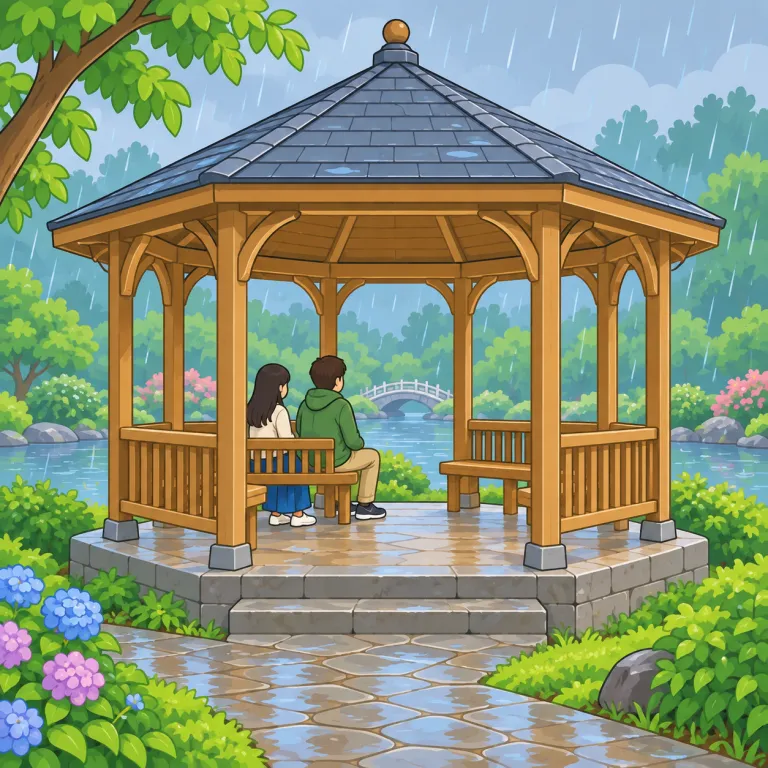
あずまや
解説 Definition
gazebo は、庭園や公園などにある、屋根付きの小さなあずまやです。側面が開いていることが多く、休憩や眺望、集まりなどに使われます。
A gazebo is a small roofed structure in a garden, park, or other outdoor space, usually open on several sides. It provides shelter and a place for resting, viewing the surroundings, social gatherings, or ceremonies.
使い方 Usage
覚え方のコツ Memory Tip
屋根の下に座って周囲を gaze「眺める」場面と結び付けましょう。庭の中にある、側面の開いた小さな休憩場所を思い浮かべると覚えやすくなります。
Picture sitting under a roof in a garden and gazing at the surroundings. Use gaze as a memory association for this small, open-sided place to rest.
例文
We sat in the gazebo and watched the rain.
私たちはあずまやに座って雨を眺めました。
The old gazebo stood at the center of the garden.
古いあずまやが庭の中央に立っていました。
They decorated the gazebo with flowers for the ceremony.
彼らは式のためにあずまやを花で飾りました。
gazebo の類義語・関連語
gazebo の語源・成り立ち Etymology
英語 gaze(じっと見る)に、ラテン語の未来形語尾 -ebo(~するだろう)を付けた造語で「私は眺めるだろう」が原義。18世紀イギリスで庭園建築の流行とともに広まった。関連語: gaze(凝視)、gazer(見つめる人)。見晴らしの良い場所に建てる東屋らしい命名。
Gazebo appeared in eighteenth-century English as the name of an ornamental garden structure or lookout. It is traditionally explained as a playful formation from English gaze combined with -ebo, resembling a Latin future-tense ending, and thus suggesting “I shall gaze.” The exact circumstances of its coinage are not firmly established, so this analysis is best treated as the conventional explanation. The word became associated with roofed, open-sided structures placed where people could enjoy a view.
同じレベルの語彙をもっと
外部辞書で調べる
この英単語をクイズで覚えよう