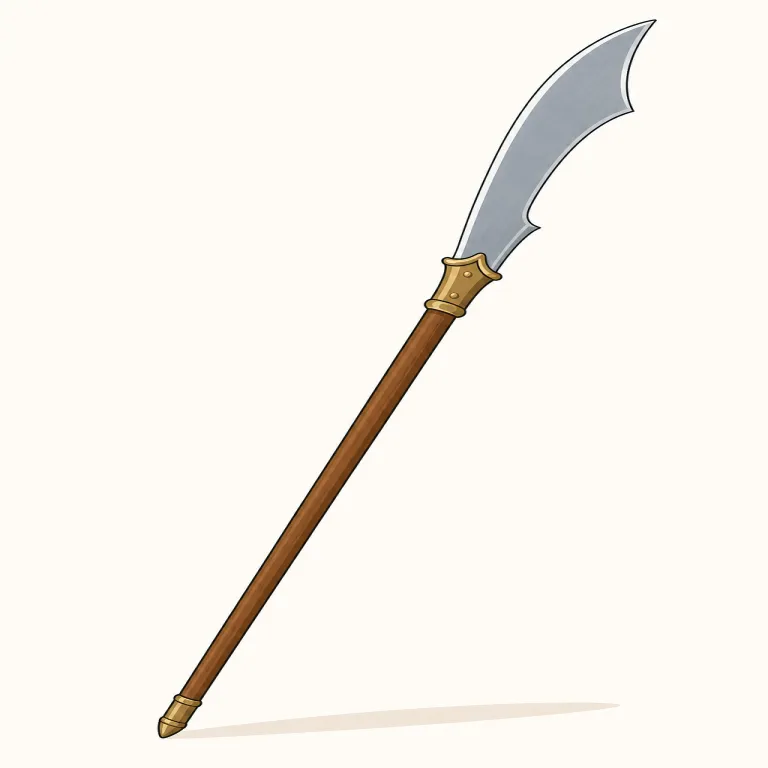
大刃の長柄武器
解説 Definition
長い柄の先に大きな刃を取り付けた中世ヨーロッパの長柄武器です。槍のような柄を持ちますが、突くだけでなく刃で切る・払うことを意識した武器です。
A glaive is a weapon with a long pole and a large blade fixed to the end. It was used mainly in the past, especially in medieval combat. The word is mostly found in history, fantasy, and game-related contexts.
覚え方のコツ Memory Tip
glaive は単独で覚えるより、「blade が付いた pole weapon」として固定すると残りやすい語です。spear は突く、axe は振る、sword は手持ちですが、glaive はその中間で「長い柄の先に大きな刃」がある武器。ファンタジー作品で兵士や騎士が列を組んで構える場面を思い浮かべると定着しやすいです。halberd と近い仲間ですが、まずは「槍ではなく、刃の存在が主役の長柄武器」と押さえるのがコツ。
Remember it as a pole weapon with a blade. A spear is mainly for thrusting, but a glaive makes you think of a long handle with a large cutting blade at the end. It is common in fantasy or historical battle scenes, which helps fix the image.
例文
The soldier wielded a glaive with both hands.
その兵士は両手でグレイブを振るった。
Glaives were popular weapons during the medieval period.
グレイブは中世に広く用いられた武器だった。
He practiced with the glaive for hours.
彼は何時間もグレイブの扱いを練習した。
glaive の類義語・関連語
類義語
紛らわしい語
glaive の語源・成り立ち Etymology
古フランス語 glaive を経てラテン語 gladius「剣」にさかのぼる語で、もとは剣を指しました。gladiator も同根で、刃物の語感が核にあり、「大きな刃を備えた武器」という発想から長柄武器の意味へ広がったと理解できます。
Glaive came into English from Old French glaive, from Latin gladius, meaning "sword." It first referred to a sword or blade, and later the sense widened to a pole weapon with a large blade. The shared root can also be seen in gladiator, originally a "swordsman."
同じレベルの語彙をもっと
外部辞書で調べる
この英単語をクイズで覚えよう