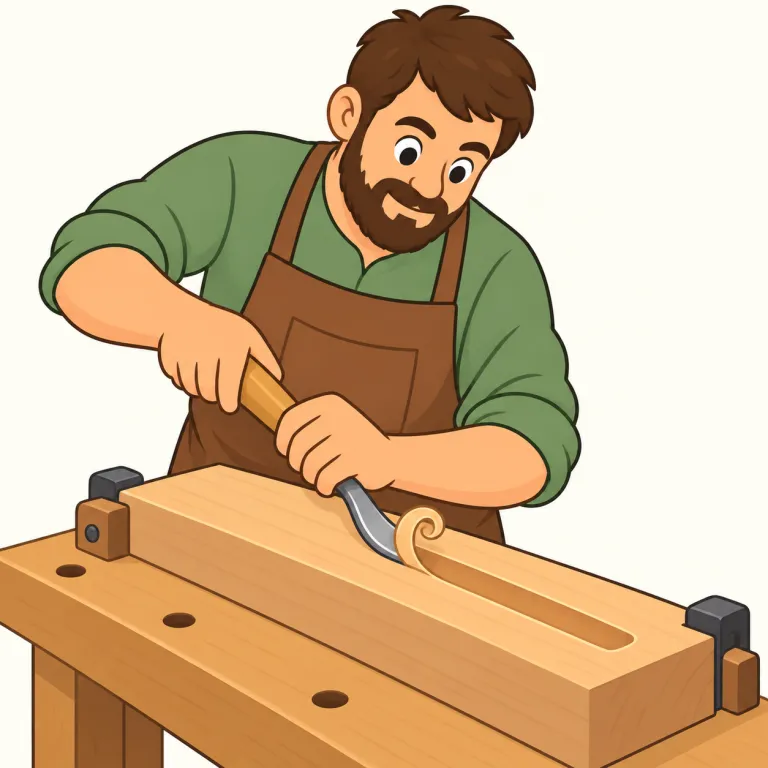
えぐる
解説 Definition
gouging は gouge(えぐる、削り取る)の現在分詞・動名詞です。硬い物の表面を深く削ったり、道具などでえぐり取ったりする動作を表します。
The act or process of cutting, scooping, or forcing material out of a surface to make a deep groove, hollow, or opening, typically with a curved chisel or another hard tool. It is the gerund or present participle of gouge.
覚え方のコツ Memory Tip
gouge「のみなどで深くえぐる」に -ing を付ける際、語末の無音 e を落として gouging となる。gouging a groove into wood、gouging clay のように、表面を浅くこする scratch ではなく、道具で材料を深く削り取って溝や穴を作る動作を思い浮かべる。
Gouging is the -ing form of gouge: remove the final silent e, then add -ing. A gouge was originally a curved cutting tool, so picture its blade digging into wood or clay and lifting material out. Typical phrases include gouging a groove into wood and gouging soft clay with a tool. The action is deeper and more forceful than scratching, which usually marks only the surface. It may function as a progressive verb—“He was gouging the wood”—or as a gerund naming the activity, as in “Gouging created a clear line.”
例文
He was gouging a groove into the wood.
彼は木に溝をえぐっていました。
The worker stopped gouging the wall when he saw the pipe.
作業員は配管を見つけると、壁をえぐるのをやめました。
Gouging the soft clay with a small tool created a clear line.
小さな道具で柔らかい粘土をえぐると、はっきりした線ができました。
gouging の類義語・関連語
gouging の語源・成り立ち Etymology
gougingはgouge「のみでえぐる・えぐり取る」から来ており、古フランス語gouge、さらに後期ラテン語gubia/gulbia「丸刃ののみ」に由来します。もとは道具名で、そこから動作名になったので、「刃で深く削る」感覚がそのまま残ります。関連語にgouge、gougerがあります。
Gouging comes from the verb gouge plus -ing, with the final silent e removed. Gouge entered English through French gouge, the name of a curved chisel, and is traced to Late Latin forms such as gubia or gulbia referring to a similar tool. The tool name gave rise to the verb meaning to cut or scoop material out deeply. The participle and gerund preserve that concrete cutting sense.
同じレベルの語彙をもっと
外部辞書で調べる
この英単語をクイズで覚えよう