厳しく制約する、手足を縛る
verb 動詞規則、資金不足、契約などが人や組織の行動能力を大きく制限することを比喩的に表す。物理的な手錠は用いず、受動態や handcuff A with B などの形でも使われる。
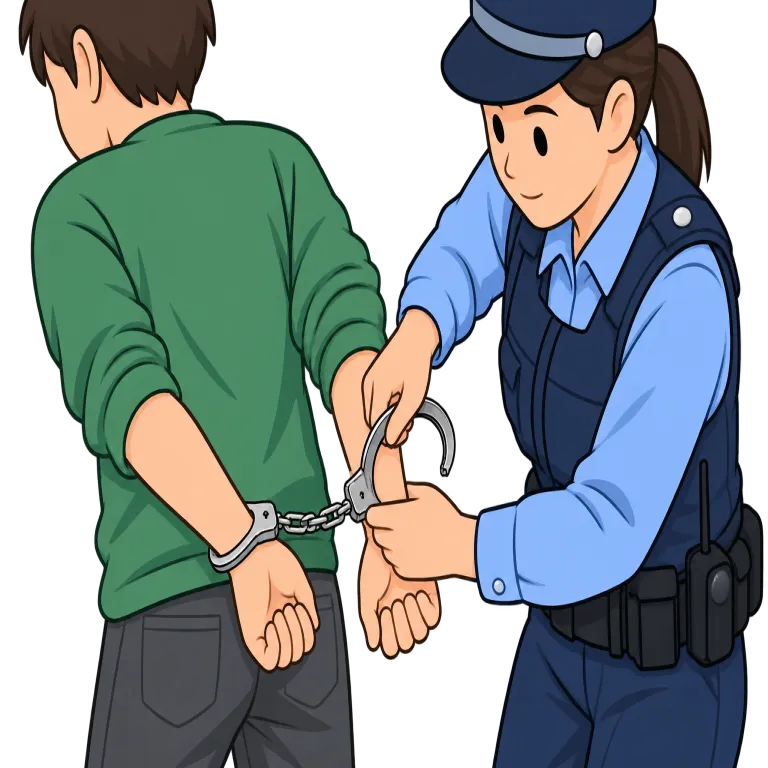
手錠をかける行為、または手錠で人を拘束すること。警察や法執行機関が容疑者を拘束する際に行われる。
Handcuffing means putting handcuffs on someone to restrain their hands, usually by the police or other authorities. It is used in situations involving arrest, control, or security. The word can also appear in discussions of prison or law enforcement procedures.
まず handcuffing は handcuff + -ing。「-ing が付いて“手錠をかけている/かける行為”」と取る。中心は handcuff で、hand はすぐ分かるので、残りは cuff=袖口の cuff を思い出すとよい。袖口が手首をぐるっと囲む感覚から、手首にはめる金具を連想できる。使う場面は police, suspect, arrest と一緒が多く、handcuffing a suspect で典型場面ごと覚えると定着しやすい。arrest は逮捕全体、handcuffing はその中の“手錠をかける動作”に焦点がある。
Break it into `handcuff + -ing`. `Cuff` can remind you of a shirt cuff, which goes around your wrist, so a handcuff also circles the wrist. Learn it with common words like `police`, `suspect`, and `arrest` for a strong memory link.
The police officer was criticized for handcuffing the elderly suspect too roughly.
警察官は高齢の容疑者に対して乱暴に手錠をかけたことで批判された。
Handcuffing procedures are taught in police training academies.
手錠をかける手順は警察学校で教えられている。
Police officers began handcuffing the protesters at the demonstration.
警察官はデモで抗議者たちに手錠をかけ始めた。
文脈によって、次の意味でも使われます。
規則、資金不足、契約などが人や組織の行動能力を大きく制限することを比喩的に表す。物理的な手錠は用いず、受動態や handcuff A with B などの形でも使われる。
hand(手)+ cuff(手首の部分)から成る複合語 handcuff に動名詞語尾 -ing が付いた形。cuff は中英語で「手袋・覆い」を意味した。関連語: cuff(袖口)、manacle(ラテン語 manus=手から)。手首を覆い拘束する道具という直感的な命名。
"Handcuffing" is built from handcuff + the suffix -ing. "Handcuff" joins hand with cuff, a word that once referred to something covering or fitting around the wrist; compare modern English cuff for the end of a sleeve. The idea was simply a device fastened around the hands or wrists, and later the verb meant putting someone into such restraints.
この英単語をクイズで覚えよう