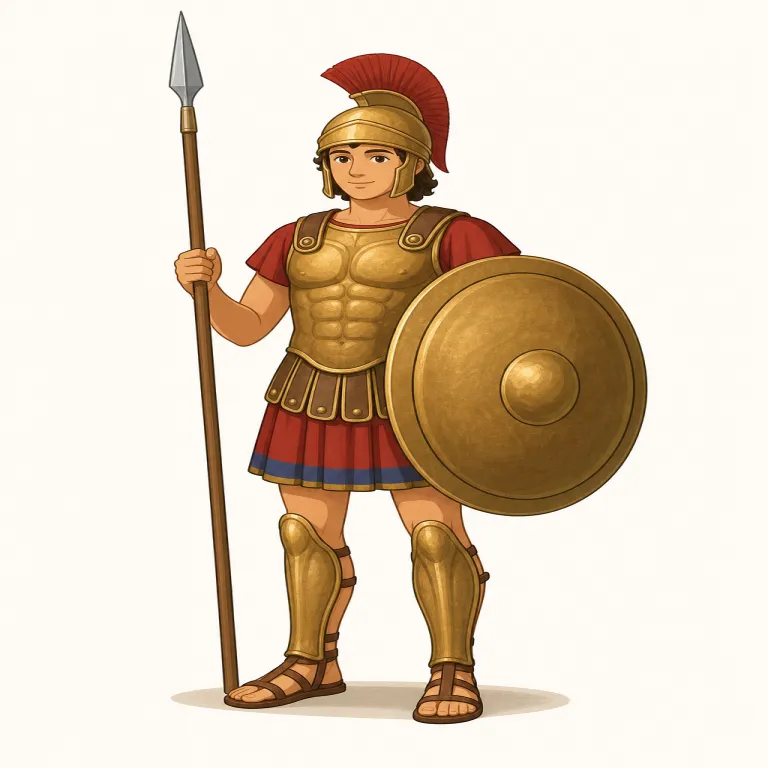
重装歩兵
解説 Definition
古代ギリシャの重装歩兵。青銅の防具と盾で武装し、ファランクス陣形で戦った兵士です。
A hoplite was a heavily armed foot soldier in ancient Greece. The word is mainly used in history and classics when describing Greek warfare and military organization.
覚え方のコツ Memory Tip
hoplite は単独で丸暗記するより、Greek / shield / spear / phalanx とセットで固定すると残りやすい語です。古代ギリシャ史では Spartan hoplites のように出やすく、「槍と大盾を持ち、横に並んで押し合う重い歩兵」を映像で思い出すと意味が安定します。騎兵や弓兵ではなく、隊列を組む infantry の一種だと位置づけるのがコツ。語尾の -lite は light「軽い」ではないので、軽装兵と逆に覚えないよう注意。
Do not memorize `hoplite` alone; lock it together with `Greek`, `shield`, `spear`, and `phalanx`. That word group gives you a clear historical image and makes it stick. Also note that `-lite` here does not mean `light`, so do not mix it up with light infantry.
例文
Hoplites formed the backbone of Greek armies.
重装歩兵はギリシャ軍の中核を成した。
A hoplite's armor was heavy and protective.
重装歩兵の鎧は重く、防御力が高かった。
Hoplite formations were effective in battle.
重装歩兵の陣形は戦闘で効果的でした。
hoplite の類義語・関連語
hoplite の語源・成り立ち Etymology
古代ギリシャ語 hoplites「重武装の兵士」に由来し、さらに hopla「武具・武器」、単数形 hoplon にさかのぼります。武器で固めた兵をそのまま呼んだ語なので、「重装歩兵」という意味に直結します。関連語は panoply です。
Hoplite comes from Greek hoplites, meaning a heavily armed soldier, from hopla or hoplon, meaning "arms" or "weapons." The word originally referred directly to a fighter defined by his equipment. A related English word is panoply, which comes from the same Greek root for armor or full equipment.
同じレベルの語彙をもっと
外部辞書で調べる
この英単語をクイズで覚えよう