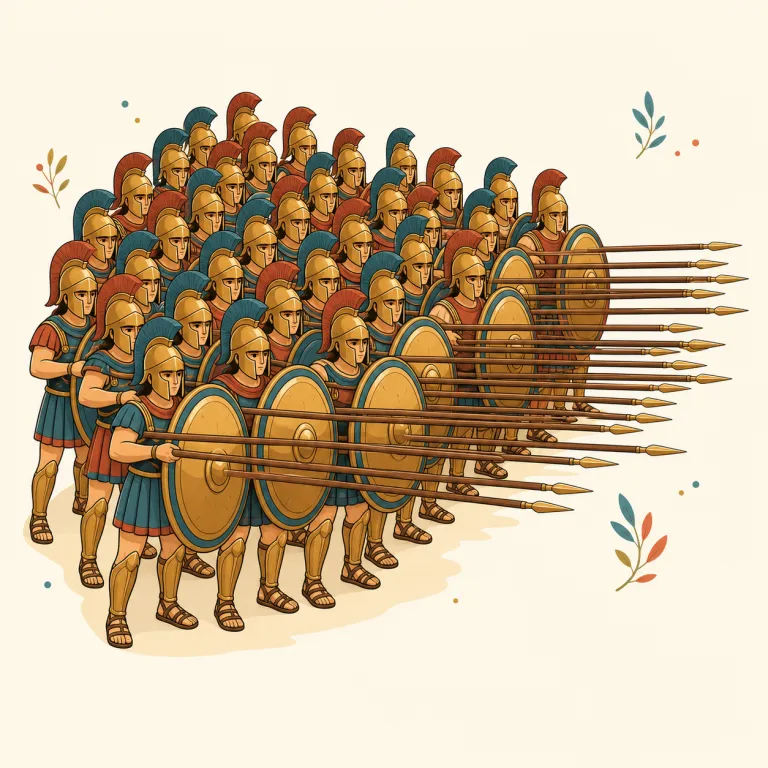
(古代ギリシャの)密集隊形、指骨
解説 Definition
古代ギリシャで用いられた、兵士が密集して進む戦闘隊形やその部隊を指す名詞です。現代英語では比喩的に密集した集団を指すほか、解剖学では手足の指を構成する骨、つまり「指骨」の意味でも使われます。
A phalanx is a tight group of soldiers standing close together in rows, especially in ancient Greece. It can also mean a body part: one of the small bones in the fingers or toes. In modern English, the military meaning is less common outside history.
覚え方のコツ Memory Tip
核は「ぎっしり整列した列」。phalanx は platoon や squad のような単なる部隊名ではなく、兵士が盾や槍をそろえ、横にも前にも隙なく詰まった“壁のような密集隊形”を指すと覚えると残りやすい。さらに指骨の意味も、小さな骨が一本の指の中で規則正しく連なる姿を重ねると自然につながる。歴史では Greek phalanx、解剖では finger/toe phalanx が出やすく、どちらも「整然と並ぶもの」で一本化すると忘れにくい。
Think of a phalanx as a tight line that works like one wall, not just a group of soldiers. The key image is people standing so close that there are no gaps. The bone meaning is easier if you picture the small bones in a finger lined up in order, like a tiny phalanx.
例文
The soldiers advanced in a phalanx with their shields locked together.
兵士たちは盾を組み合わせ、密集隊形で前進した。
The doctor examined the fractured phalanx in the patient's finger.
医師は患者の指の骨折した指骨を調べた。
Each finger contains three phalanges except the thumb.
親指を除き、各指には三つの指骨がある。
phalanx の類義語・関連語
紛らわしい語
phalanx の語源・成り立ち Etymology
ラテン語 phalanx を経て、ギリシャ語 phalanx / phalangos「密集隊形・指骨」に由来する。もとは「丸太・材木」を表した語とされ、兵士や骨がきっちり並ぶ姿から「密集軍」「指骨」の意味になった。関連語は phalange, phalanstery。
From Latin phalanx, borrowed from Greek phalanx or phalangos, meaning a close military line and also a finger or toe bone. The Greek word may have first meant something like a log or piece of timber. The idea then shifted to things set closely side by side, which explains both the battle formation and the bones. Related English words include phalange and phalanstery.
同じレベルの英単語をもっと
外部辞書で調べる
この単語を英単語クイズで覚えよう