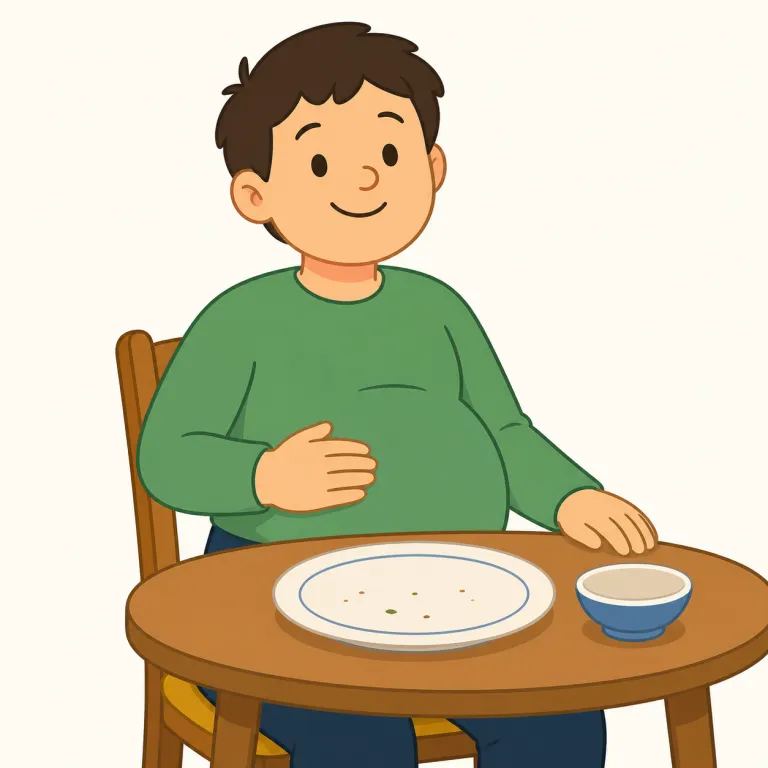
i'm full
i'm full は英検3級レベルの英熟語で、「お腹いっぱいです」という意味があります。発音記号は /ˈaɪm ˈfʊl/ です。
お腹いっぱいです
解説 Definition
食事を十分に食べて満足したときに使う一言。デザートや追加注文を断るときにも自然。
A phrase used to say that you have eaten enough and do not want more food. It describes the feeling of having a completely satisfied stomach. It is common after a meal or when refusing more food politely.
覚え方のコツ Memory Tip
full は『空きがなく中まで満ちている』基本イメージで覚えると、食後に胃がいっぱいな感覚へ自然につながる。まず単語 full を固め、I’m full は『私は満ちている→もう入らない』と一続きで覚える。会話では食後に追加を勧められて断る定番表現で、No thanks, I’m full. の形までセットにすると実戦的。hungry の反対側に置いて I’m hungry / I’m full を対で覚えると出しやすい。stuffed はもっと苦しい満腹なので、I’m full のほうが無難で自然。
Remember the basic image of `full` as completely filled, with no space left. That image easily extends to your stomach after a meal: there is no room for more. It sticks well if you learn it as a pair with `I'm hungry`.
例文
I'm full after lunch.
昼食のあとでお腹いっぱいです。
I'm full, so no cake.
お腹いっぱいなのでケーキはいりません。
I'm full after dinner.
夕食を食べてお腹いっぱいです。
i'm full の語源・成り立ち Etymology
fullは古英語fullからゲルマン祖語*fullazに遡る。ラテン語plenus(満ちた)と同じ印欧祖語*pleh₁-が起源。「容器が満たされた」イメージが食事の満腹感にも転用された。関連語:fulfill(満たす)、plenty(たくさん)。
The key word “full” comes from Old English full and goes back to the Germanic root *fullaz. It is related to Latin plenus and ultimately to an Indo-European root meaning “to fill.” The basic image was something filled up completely, like a container. That physical sense later extended easily to a person who has eaten enough, as in “I’m full.”
同じレベルの語彙をもっと
英検3級の一覧へ →外部辞書で調べる
この英熟語をクイズで覚えよう