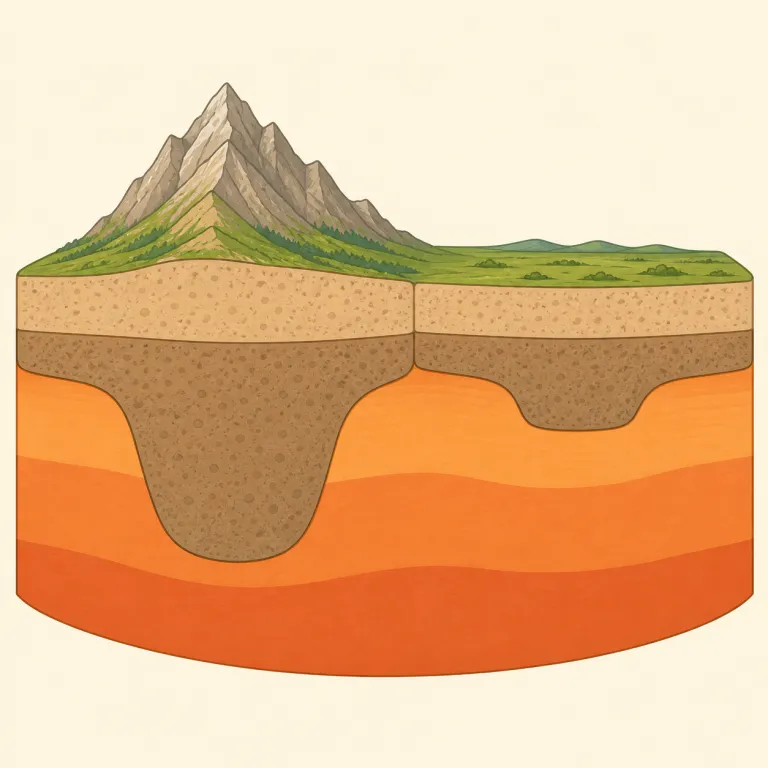
等方圧の、全方向等圧の
adjective 形容詞材料工学などで、物体の全方向からほぼ等しい圧力を加える方式を表す。isostatic pressing「等方圧加圧」のように用い、地殻の浮力均衡を表す地質学上の語義とは区別される。
地殻と上部マントルが浮力により重力的に平衡状態にあること。大陸地殻は異なる密度の岩盤で構成されており、この浮力均衡により地表の形状が変化する。
Isostatic describes a state of balance, especially in geology, where the Earth's crust is supported by the material below it. It is used when talking about how land rises or sinks to keep this balance. This is a technical word and is mostly found in earth science.
`isostatic` は、まず `static`「静的な・つり合った」を芯に置くと覚えやすい語です。そこに `iso-`「同じ」が付いて、「どこかが同じ状態に保たれている」感覚を持つと、地殻が浮力で重力的バランスを取る意味につながります。地学では `isostatic balance` や `isostatic adjustment` の形で見かけやすく、「完全に動かない」ではなく、動いた結果として全体がつり合う語だと押さえると定着します。`isometric` や `isobar` の `iso-` と一緒に覚えると整理しやすいです。
Use the parts: `iso-` means "equal" and `static` suggests something staying in balance. That makes `isostatic` easier to remember as a geology word about balance being maintained or restored. Common pairs like `isostatic balance`, `isostatic adjustment`, and `isostatic rebound` are worth memorising as chunks. It contrasts with `tectonic`, which is broader and not focused on balance.
Isostatic adjustment occurs after ice sheet melting.
氷床が融解した後に地殻均衡調整が起こる。
The isostatic rebound is reshaping the landscape.
地殻均衡による隆起が地形を変えつつある。
Geologists measure isostatic changes over time.
地質学者は時間の経過に伴う地殻均衡の変化を測定する。
文脈によって、次の意味でも使われます。
材料工学などで、物体の全方向からほぼ等しい圧力を加える方式を表す。isostatic pressing「等方圧加圧」のように用い、地殻の浮力均衡を表す地質学上の語義とは区別される。
iso-は「等しい」、stat-はギリシャ語由来で「立つ・保つ」。地殻が重さをつり合わせて『同じ圧で立っている』状態を表すので、isostaticは地殻均衡の意になる。staticやstableも同じstat-系。
Isostatic comes from `iso-` meaning "equal" and a Greek root seen in `static`, from a verb meaning "to stand" or "remain steady." It was formed to describe a state where the earth's crust stays balanced under equal pressure or weight. Related English words include `static` and `stable`, which share the idea of standing firm.
この英単語をクイズで覚えよう