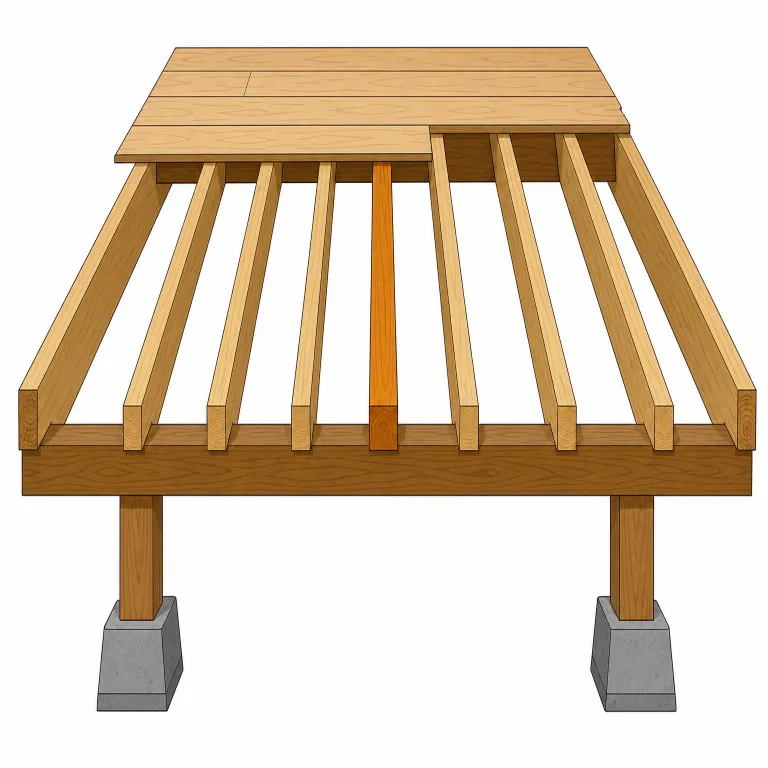
根太
解説 Definition
建物の床や天井を支える平行した木製または金属製の梁。構造的な支持を提供する。
A joist is a long horizontal piece of wood, steel, or concrete that supports a floor or ceiling in a building. It is an important part of a structure and helps carry weight across a space. This is mainly a construction and architecture term.
覚え方のコツ Memory Tip
建築語としては、まず floor joist / ceiling joist というかたまりで覚えると定着しやすい。joist は「床板や天井材を受ける、細めの平行材」。beam のような主役の大梁ではなく、同じ向きに何本も並んで荷重を分散する部材だとイメージする。現場では spacing や support と一緒に語られやすい。rafter は屋根の傾斜材、stud は壁の縦材なので、joist は“床・天井の横並び”と位置で区別すると混同しにくい。
Remember it as a building word in chunks: `floor joist` and `ceiling joist`. A joist is not the main big beam; it is one of many parallel pieces that support a floor or ceiling. To avoid confusion, think: `joist` for floor or ceiling, `stud` for wall, `rafter` for roof.
例文
The carpenter installed wooden joists to support the new floor.
大工は新しい床を支えるために木製の根太を取り付けました。
Floor joists must be properly spaced to distribute weight evenly.
床の根太は重さを均等に分配するために適切に間隔を置く必要があります。
Steel joists are commonly used in modern commercial building construction.
スチール製の根太は、現代の商業用建物の建設でよく使われます。
joist の類義語・関連語
紛らわしい語
joist の語源・成り立ち Etymology
joist は古フランス語 giste「梁」からで、動詞 gesir「横たわる」にさかのぼり、さらにラテン語 iacere「横たわる」に通じます。床板がその上に“寝る”木材という発想で、意味が形に直結しています。関連語は gist, adjacent。
Joist comes from Old French giste, meaning a beam, from a verb meaning "to lie." That goes back to Latin iacere, "to lie down," a root also seen in words like adjacent and jetty. The name reflects the idea of a supporting beam on which boards or flooring "lie."
同じレベルの語彙をもっと
外部辞書で調べる
この英単語をクイズで覚えよう