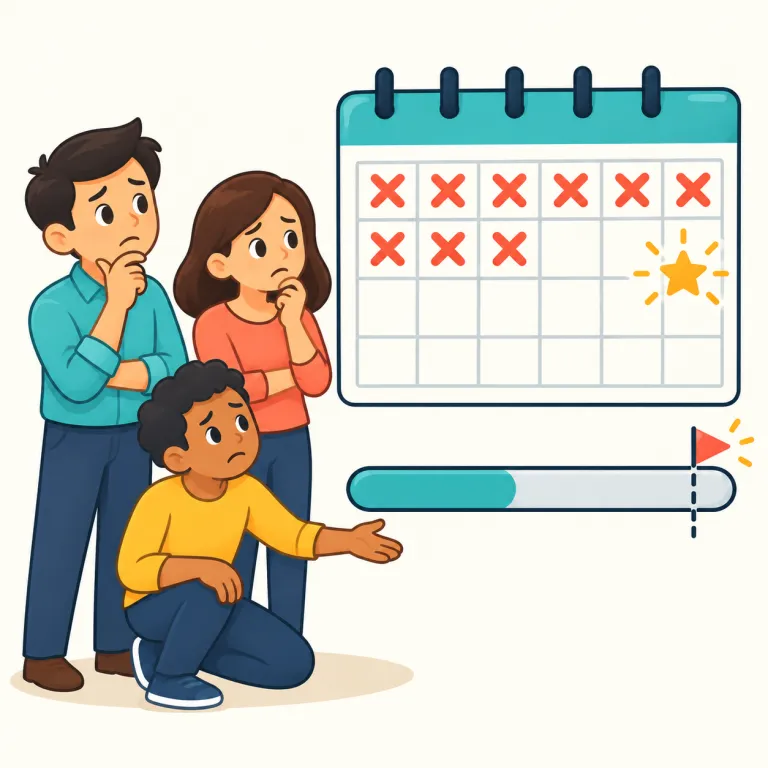
遅れている
解説 Definition
lagging は lag(遅れる)の現在分詞で、形容詞として「遅れている」という意味で使われます。進度・性能・反応などが期待より後れている状態を表します。
Falling behind an expected level, schedule, speed, or standard, or responding more slowly than required. As an adjective, it can describe delayed progress, weak performance, or a computer or internet connection that reacts noticeably late.
覚え方のコツ Memory Tip
短母音+子音で終わる lag は g を重ねて -ing を付け、lagging /ˈlæɡɪŋ/ になります。「単に遅い」より、予定・基準・他者から後ろに残る感覚が中心です。lagging behind schedule、lagging sales、connection is lagging のまとまりで覚えましょう。
Lagging comes from lag. Because the base is a short one-syllable word ending in one vowel plus one consonant, the final g is doubled before -ing: lag becomes lagging, pronounced /ˈlæɡɪŋ/. Its key image is not merely moving slowly but remaining behind a schedule, target, group, or expected response time. Learn frequent combinations such as “lagging behind schedule,” “lagging sales,” and “the connection is lagging.” These patterns cover progress, performance, and technology while preserving the shared idea of failing to keep up.
例文
The project is lagging behind schedule.
そのプロジェクトは予定より遅れています。
Our internet connection is lagging today.
今日はインターネット接続が遅れ気味です。
The team worked hard to improve its lagging sales.
チームは遅れている売上を改善するために懸命に取り組みました。
lagging の類義語・関連語
lagging の語源・成り立ち Etymology
laggingはlag+-ing。lagは「後れをとる」で、語源は不詳ですが、ノルウェー語系の「のろのろ進む」と結びつけられます。だからlaggingは、単に遅いのでなく『基準や集団から後ろに残る』感じです。関連語はlag, laggard。
Lagging is the -ing form of lag, a verb meaning to fall behind or fail to keep pace. The deeper origin of lag is uncertain, although it has sometimes been compared with Scandinavian words associated with slow movement. English has used the verb since the early modern period. The doubled g follows the regular spelling rule for adding -ing to a stressed, one-syllable word ending in a single consonant after a short vowel.
同じレベルの語彙をもっと
外部辞書で調べる
この英単語をクイズで覚えよう