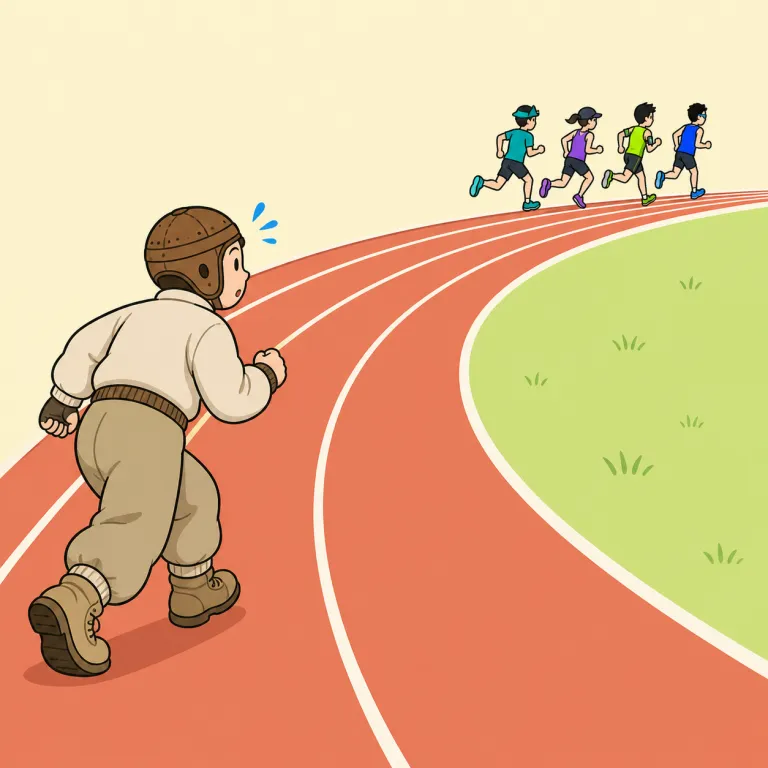
出遅れた人、立ち遅れたもの
解説 Definition
進歩や競争、変化の流れについていけず、ほかより遅れている人や組織、物事を指す名詞です。特にビジネスや技術、学習の文脈で、先行する集団に比べて対応や成長が遅い対象を表すときに使われます。
A laggard is a person, group, or thing that moves more slowly than others or falls behind. It is often used in business, technology, or social change when someone is late to develop, act, or adopt something new.
覚え方のコツ Memory Tip
lag が「遅れる」だと分かれば核はつかめます。まず lag behind で「後れを取る」を思い出し、その状態にある人・組織・製品が laggard。business や tech では market leader の反対側に置かれやすく、early adopter と対比すると定着しやすいです。単なる slow な人ではなく、「変化や競争の流れについていけず後方に残った存在」という含みが強い語。technology laggard, industry laggard のようなまとまりで覚えると使う場面まで一緒に残ります。
Start from `lag`, especially the phrase `lag behind`. A `laggard` is the person or group left behind when others move ahead. It is easy to remember by contrasting it with `leader` or `early adopter`, especially in business or technology.
例文
The company was a laggard in adopting new technology.
その会社は新技術の導入で立ち遅れた企業だった。
In the race, the laggard fell far behind the leaders.
そのレースでは、出遅れた選手が先頭集団から大きく引き離された。
Investors sold the laggards and bought stronger stocks.
投資家たちは出遅れ銘柄を売り、より強い銘柄を買った。
laggard の類義語・関連語
laggard の語源・成り立ち Etymology
laggard は英語 lag「遅れる・後ろに残る」に、古フランス語経由の接尾辞 -ard が付いた語です。もとは「のろのろして取り残される人」で、そこから「遅れている」の意味に広がりました。関連語は lag, lagging。
Laggard comes from English lag, meaning "to fall behind" or "move slowly," with the suffix -ard, which often forms nouns for a type of person. It first meant someone who was slow and left behind. From that, it developed into the general sense of a person who does not keep up; related forms are lag and lagging.
同じレベルの語彙をもっと
外部辞書で調べる
この英単語をクイズで覚えよう