伐採 / ログ記録
解説 Definition
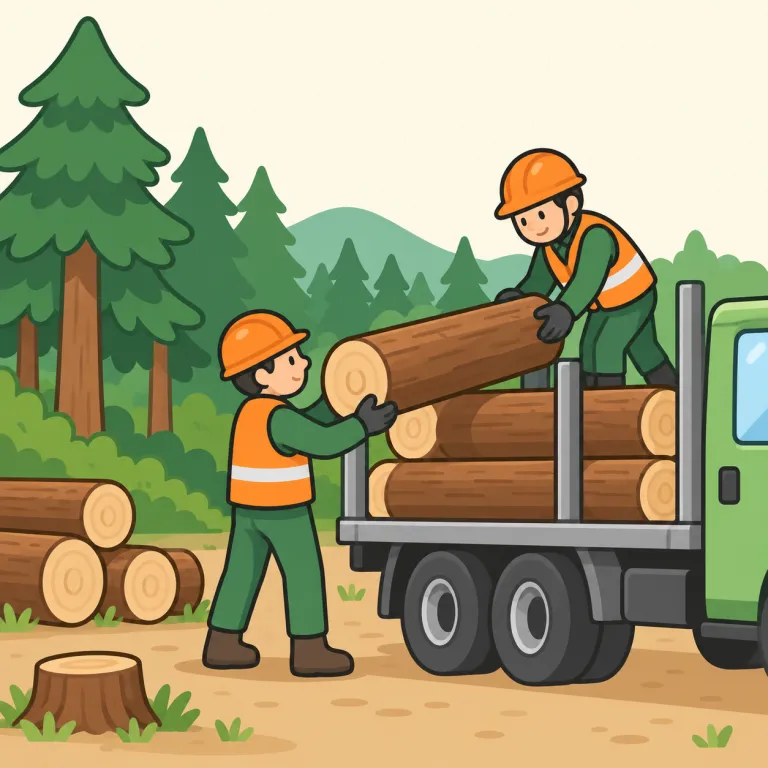
logging は、木を伐採すること、またはコンピューターで動作や出来事を記録することを指します。日本語の「ログ」は記録の意味で使われることが多いですが、英語では林業の「伐採」という意味でもよく使われます。
Logging is the activity of cutting down and processing trees for timber. In computing, it is the systematic recording of events, operations, messages, or errors so that a system’s behavior can later be monitored or investigated.
覚え方のコツ Memory Tip
logging は log に -ing を付け、短い母音を保つため g を重ねた形です。森の話なら丸太を得るための「伐採」、アプリやサーバーの話なら出来事を残す「ログ記録」を指します。logging near the river と error logging のように、場所なら林業、error・system・data なら記録と見分けましょう。
Start with log, which can mean a cut piece of timber or a recorded entry. Adding -ing doubles the final g: log becomes logging, preserving the short vowel sound. This spelling links two meanings. In a forest, logging means cutting and collecting trees. In software, logging means creating records of events or errors. Let the surrounding nouns guide you: protected forest, timber, and river suggest forestry, while error, event, server, and application suggest computer records. In both uses, imagine a continuing activity involving logs, physical or informational.
例文
Logging is limited in this protected forest.
この保護林では伐採が制限されています。
The company stopped logging near the river.
その会社は川の近くでの伐採をやめました。
The app uses logging to record errors.
そのアプリはエラーを記録するためにログ記録を使います。
logging の類義語・関連語
logging の語源・成り立ち Etymology
中英語 logge(切り倒された丸太)に由来し、伐採の意味が生まれた。航海用語で丸太を使い速度を記録したことから「ログ記録」の意味も派生。関連語:log(丸太/記録)、catalog(目録)。語根を知ると「記録する」と「木を切る」が一本の丸太でつながる。
Logging is formed from log plus -ing, with the final g doubled. Log first referred to a bulky piece of cut wood, which naturally produced the forestry sense of cutting and handling timber. The recording sense developed through nautical practice: sailors used a log-based device to estimate a ship’s speed and entered the results in a logbook. Computing later adopted log for a chronological record of system events.
同じレベルの語彙をもっと
外部辞書で調べる
この英単語をクイズで覚えよう