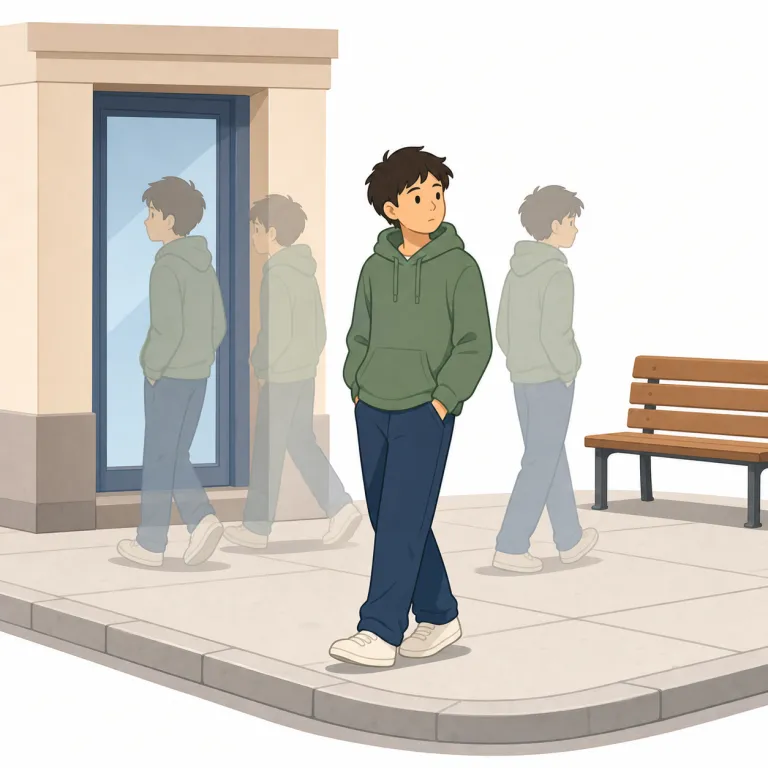
徘徊
解説 Definition
目的もなく、ある場所でぶらぶらしたり、うろついたり、たむろしたりする行為です。単なる散歩よりも、不審・迷惑・不適切と見なされやすい含みがあります。店先や駅前などでの No loitering は「たむろ禁止」に近い意味です。
Loitering is the act of staying in a public place for a long time without a clear reason or purpose. It is often used in contexts like streets, shops, or stations, where this behavior may seem suspicious or unwanted. In some places, it can also have a legal meaning.
覚え方のコツ Memory Tip
`loitering` はまず動詞 `loiter` を核に覚え、`-ing` が付いて「ぶらぶらしている行為そのもの」になった形だと見ると整理しやすいです。単なる `walk` や `stroll` のような前向きな移動ではなく、目的もなくその場に居続けたり、店先・駅前・学校前でうろついたりする感じ。`hang around` や `linger` に近いが、より迷惑・不審な含みを持ちやすい語です。看板の `No loitering` をセットで覚えると、警戒される場面の語だと定着します。
First remember the verb `loiter`, then `loitering` is the act itself. It often appears in the warning `No loitering`, which is a very strong memory hook. That sign helps you feel that the word is not neutral like `walk` or `stroll`, but has a suspicious or unwanted tone.
例文
The police warned him about loitering in the shopping mall.
警察は彼に、ショッピングモール内をうろつかないよう注意しました。
Loitering in the park after dark is not recommended.
暗くなってから公園をうろつくのはお勧めできません。
The store owner complained about the loitering outside the store.
店主は、店の外に人がたむろしていると苦情を言いました。
loitering の類義語・関連語
loitering の語源・成り立ち Etymology
`loitering` は `loiter`+名詞化の `-ing`。`loiter` は中英語を経て、中期オランダ語系の『ぶらつく・ぐずぐずする』にさかのぼるとされ、目的なくうろつく「徘徊」の感覚につながる。関連語に `loiterer`、同系とされる `lout` がある。
Loitering comes from loiter plus the noun ending -ing. Loiter came into Middle English from a Dutch-related source, probably connected with words meaning to wander about or delay. The idea of moving slowly without clear purpose developed into the modern sense of hanging around aimlessly. A related word is loiterer.
同じレベルの語彙をもっと
外部辞書で調べる
この英単語をクイズで覚えよう