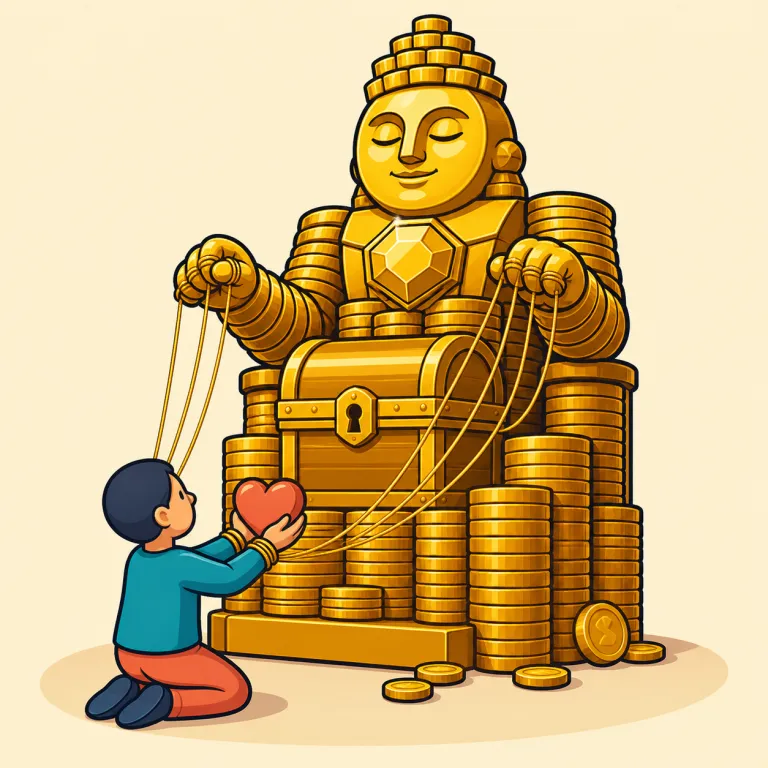
富・金銭の偶像
解説 Definition
人を支配したり堕落させたりするものとして見た富や金銭を指します。聖書由来の語で、富を神のように仕える対象として批判的に表す文脈で使われます。
Mammon means wealth or money when it is loved too much or treated like something to worship. It is used to criticize greed and the belief that money matters more than moral values. The word has a literary and religious tone.
覚え方のコツ Memory Tip
mammon は単なる money や wealth の同義語ではなく、富を人間の主人や神のような存在に見立てて非難する語です。聖書の serve God or mammon という対立を一枚の場面にし、神ではなく金銭の偶像にひざまずく姿を思い浮かべると、この批判的な含みまで残ります。serve mammon「富に仕える」、be ruled by mammon「金銭の偶像に支配される」、pursuit of mammon「富への盲目的追求」が目印です。中立的に資産額を述べる場面には使わず、金のために原則を捨てる文脈の語と押さえると混同しにくいです。
Remember `mammon` through set phrases such as `worship of mammon` or `serve mammon`. That makes it easier to connect with religious or moral criticism, not just money itself. Also keep it separate from `manna`, which is a completely different word.
例文
The sermon warned against serving mammon instead of God.
その説教は、神ではなく富の偶像に仕えることを戒めました。
The novel portrays a city ruled by mammon.
その小説は、富に支配された都市を描いています。
He sacrificed his principles in pursuit of mammon.
彼は富を追い求めるあまり、自分の信条を犠牲にしました。
mammon の類義語・関連語
mammon の語源・成り立ち Etymology
mammonはアラム語mamona「富・財産」が教会ラテン語を経て英語に入った語で、聖書で「富」が人格化されて広まりました。mammonismやmammonistと同根で、単なる金ではなく「富を神のように崇めること」を表すようになりました。
Mammon comes from Aramaic mamona, meaning "wealth" or "property," and passed into English through Church Latin and biblical use. In the Bible, wealth was treated almost like a false master or idol. Because of that, the word came to suggest not just money, but devotion to riches, and it is related to mammonism and mammonist.
同じレベルの語彙をもっと
外部辞書で調べる
この英単語をクイズで覚えよう