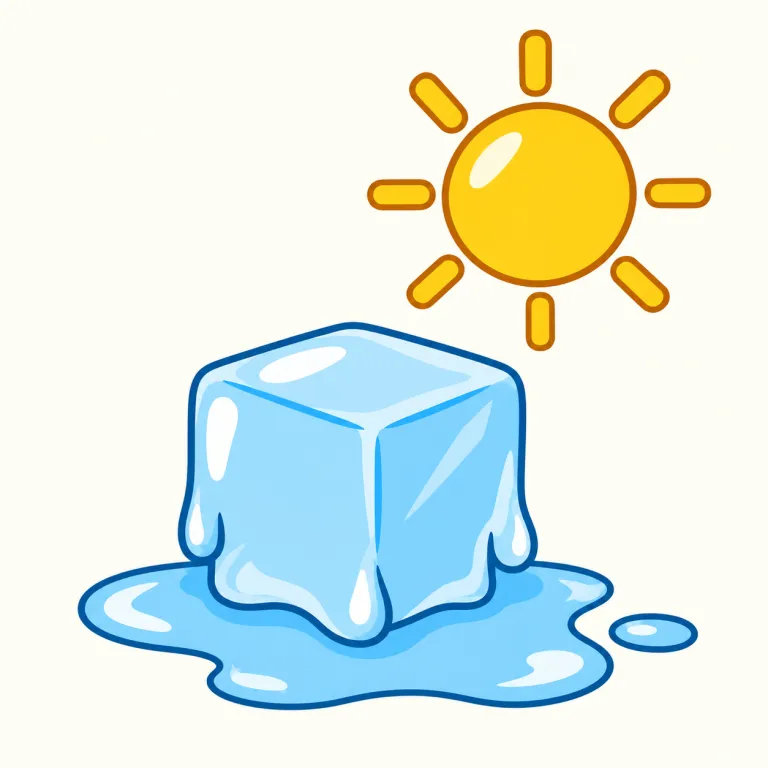
溶ける
解説 Definition
melting は melt(溶ける、溶かす)の現在分詞・動名詞です。氷やチョコレートなどが熱で液体になる動作や状態を表します。
Melting is the present participle and gerund form of melt. It describes a solid becoming liquid through heat, or the process of causing that change, especially with substances such as ice, snow, butter, or chocolate.
覚え方のコツ Memory Tip
原形 melt に -ing を付けた現在分詞・動名詞。melt は末尾が無音の e ではないため、そのまま melting となり、子音を重ねない。発音は /ˈmeltɪŋ/ で、melt の /t/ も残る。ice is melting の進行形や started melting の補語として、固体が熱で液体になる場面と結び付ける。
Start with the base verb melt and add -ing: melt + ing becomes melting. No final e is dropped and no consonant is doubled. The pronunciation is /ˈmeltɪŋ/, with the /t/ of melt still present before the -ing sound. Picture ice, snow, butter, or chocolate gradually changing from solid to liquid. Use “is melting” for an action in progress, as in “The ice is melting,” and “melting” after verbs such as start or watch, as in “The butter started melting” or “We watched the snow melting.”
例文
The ice is melting in the sun.
氷が日なたで溶けています。
The butter started melting in the pan.
バターがフライパンの中で溶け始めました。
We watched the snow melting on the road.
私たちは道路の雪が溶けていくのを見ました。
melting の類義語・関連語
melting の語源・成り立ち Etymology
古英語meltan(溶ける)に由来し、ゲルマン祖語*meltaną(柔らかくなる)にさかのぼる。印欧語根*meld-は「柔らかい」の意。関連語:malt(麦芽=穀物を柔らかくしたもの)、smelt(鉱石を溶かす)。固体が熱で柔らかくなる原義から。
Melting is formed from the verb melt plus the participial and gerund suffix -ing. Melt comes from Old English meltan and belongs to a Germanic group of words associated with becoming soft or liquid through heat. Related historical forms appear in other Germanic languages. The modern form melting can function in a progressive verb phrase, as a participle, or as a noun naming the process.
同じレベルの語彙をもっと
外部辞書で調べる
この英単語をクイズで覚えよう