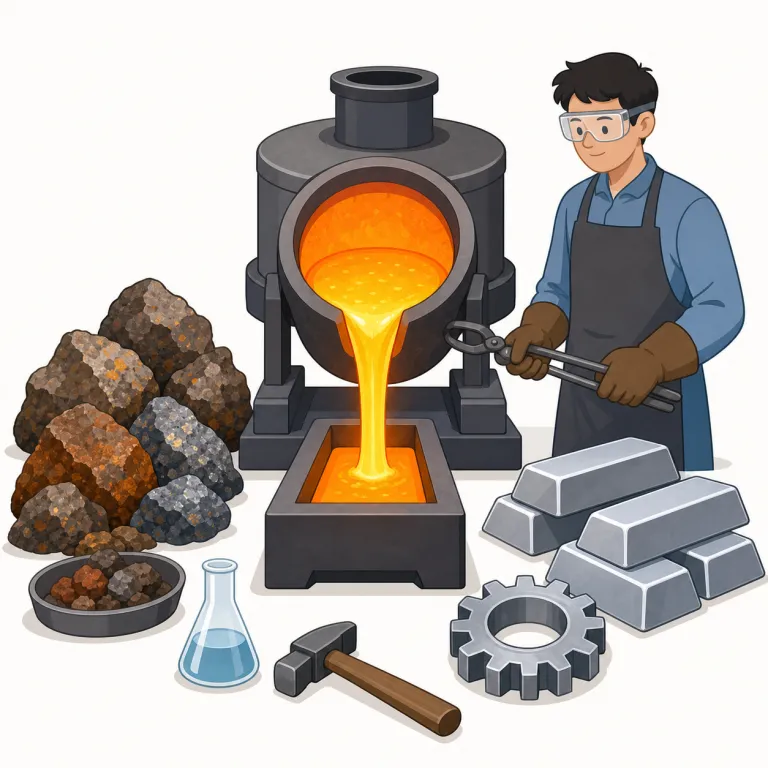
metallurgy
metallurgy はTOEFL 100・IELTS 7.5レベルの英単語で、「冶金学」という意味があります。発音記号は /ˈmɛtəlɚdʒi/ です。
冶金学
解説 Definition
冶金学は金属の性質、生産、および加工に関する科学と技術の分野である。金属材料がどのように振る舞うかを調べ、溶解・精錬・成形・熱処理などの工程を通して品質を制御する。製造業やエンジニアリングで強度や耐久性を求められる部材を作る上で中心的な役割を担っている。
Metallurgy is the science and technology of metals. It involves studying how metals are taken from the earth, processed, combined, and used to make useful materials and products.
覚え方のコツ Memory Tip
まず metal がそのまま入っているので「金属の分野」とつかむ。そこに、学問・専門技術を表す長い語尾が付いた専門語だと覚えるとよい。意味は単なる metal ではなく、金属を溶かす・精錬する・成形する・熱処理するまで含む“金属の性質と加工の学問”。metallurgical engineering、metal processing、alloy design など製造現場の文脈と一緒に覚えると強い。mineralogy が鉱物学、meteorology が気象学なのに対し、metallurgy は金属特化だと区別すると混同しにくい。
The easiest hook is that `metal` is right there inside the word. So first remember it as the study or technology of metals, not just metals themselves. It often appears in technical contexts like engineering, alloys, and metal processing, which helps fix the word in memory.
例文
Metallurgy plays an important role in modern manufacturing.
冶金学は現代の製造業において重要な役割を果たしている。
The engineer studied metallurgy to improve the steel quality.
エンジニアは鋼の品質を改善するために冶金学を研究した。
Advances in metallurgy have led to stronger and lighter materials.
冶金学の進歩は、より強く、より軽い材料につながった。
metallurgy の類義語・関連語
metallurgy の語源・成り立ち Etymology
metallurgy はギリシャ語 metallourgia に由来し、metallon「金属・鉱山」+ ergon「仕事」+ -y でできた語です。関連語に metal や ergonomics があります。つまり原義は「金属を扱う仕事」で、そこから金属の精錬や性質を学ぶ「冶金学」になりました。
Metallurgy comes from Greek metallourgia, meaning "working with metal." It is made from metallon "metal, mine" and ergon "work," a root also seen in ergonomics. The word first meant the craft of handling metal and later became the scientific study of extracting, refining, and shaping it.
同じレベルの語彙をもっと
TOEFL 100の一覧へ →外部辞書で調べる
この英単語をクイズで覚えよう