パントマイム / 無言劇
解説 Definition
mime は、言葉を使わずに身ぶりや表情で物語や動作を表す「パントマイム」や「無言劇」を指す名詞です。また、そのような演技をする人を指す場合もあります。
This noun refers to a performance that tells a story or shows an action through gestures, facial expressions, and body movements instead of words. It can also refer to a person who gives this kind of performance.
覚え方のコツ Memory Tip
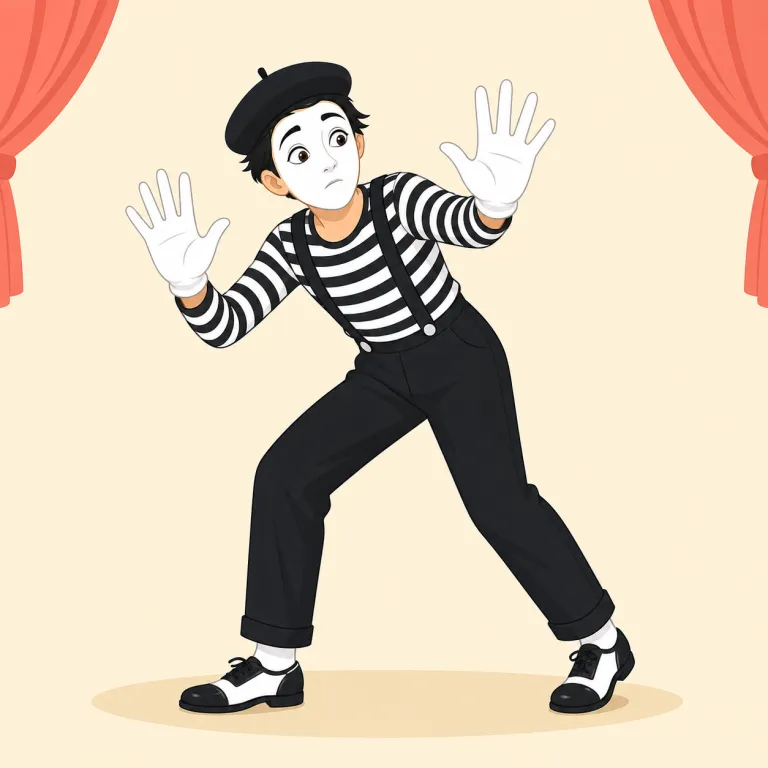
mime は、言葉を使わず、身ぶり・表情・体の動きで物語や動作を示す「パントマイム・無言劇」です。mimic(まねる)と同じ mim- の「模倣」を手掛かりにし、見えない壁を手でなぞる演者を思い浮かべましょう。演劇形式なら study mime、a short mime、演者なら the mime のように使えます。without saying a word が内容を端的に示す表現です。台詞のある drama ではなく、観客が動きだけから意味を読み取る舞台だと押さえると混同しにくいです。
Connect mime with mimic and picture a performer tracing an invisible wall without saying a word. The shared mim- pattern can remind you of imitation through movement. Remember that the word can name either the silent performance or its performer.
例文
The actor studied mime to improve his control of movement.
その俳優は動きのコントロールを高めるためにパントマイムを学んだ。
A short mime opened the theater festival.
短い無言劇が演劇祭の幕開けを飾った。
The mime made the audience laugh without saying a word.
そのパントマイム役者は一言も話さずに観客を笑わせた。
mime の類義語・関連語
紛らわしい語
mime の語源・成り立ち Etymology
ギリシャ語の「mīmos」に由来し、語根「mim-(模倣)」が基盤となっています。台詞を使わず身振りや人まねで表現する行為から、無言劇やその演者を指す言葉になりました。同じ語根を持つmimic(真似る)やpantomime(全身模倣劇)も、この核心イメージを共有しています。
The word comes from Greek mīmos and is based on mim-, associated with imitation. The same central idea appears in mimic and pantomime.
同じレベルの語彙をもっと
外部辞書で調べる
この英単語をクイズで覚えよう