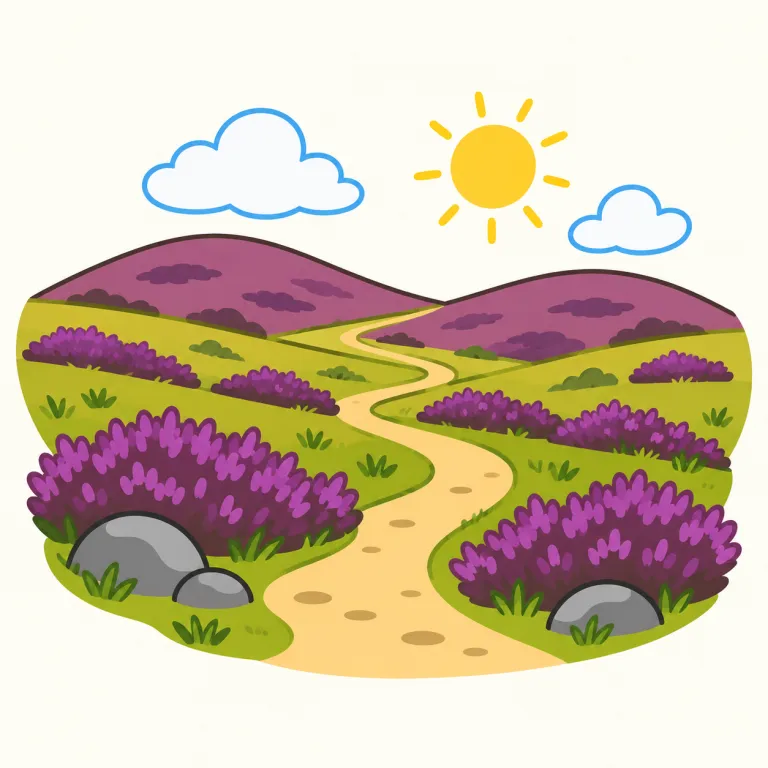
荒野
解説 Definition
moors は moor「荒野、原野」の複数形です。特に英国などに見られる、木が少なく、草やヒースに覆われた開けた丘陵地や湿った原野を指します。
Large areas of open, uncultivated land, especially in Britain, that are often hilly, windy, and covered with grass, heather, or wet ground rather than many trees. The form is the plural of moor.
使い方 Usage
使い分け Common distinctions
- desert「砂漠」とは異なり、moors は湿った地面や草、ヒースのある原野にも使われます。 Unlike desert, moors can refer to open land with wet ground, grass, and heather.
覚え方のコツ Memory Tip
霧のかかった英国の原野に、草やヒースが広がり、風が吹き抜ける景色を連想しましょう。moor に複数の -s が付いた形で、語末は /z/ と発音します。
Picture misty British uplands covered with grass and heather, with wind sweeping across them. Moors is moor plus plural -s, pronounced /z/.
例文
The path crosses the open moors.
その小道は開けた荒野を横切っています。
She took photographs of the misty moors at sunrise.
彼女は日の出のころ、霧のかかった荒野の写真を撮りました。
Strong winds swept across the moors all afternoon.
午後の間ずっと、強い風が荒野を吹き抜けました。
moors の類義語・関連語
moors の語源・成り立ち Etymology
moors は moor の複数形で、古英語 mōr「湿地・荒れ地」に由来し、さらにゲルマン祖語 *mōraz にさかのぼります。もとは水気のある荒地の感覚でしたが、そこから木の少ない広い荒野全体を指す語になりました。関連語に moorland, German Moor があります。
Moors is the plural of moor in the landscape sense. Moor comes from Old English mōr, meaning marshy ground, wasteland, or uncultivated open country, and has related forms in other Germanic languages. Its meaning broadened from wet or barren land to the open, often heather-covered uplands associated particularly with Britain. The final -s is the regular English plural ending.
同じレベルの語彙をもっと
外部辞書で調べる
この英単語をクイズで覚えよう