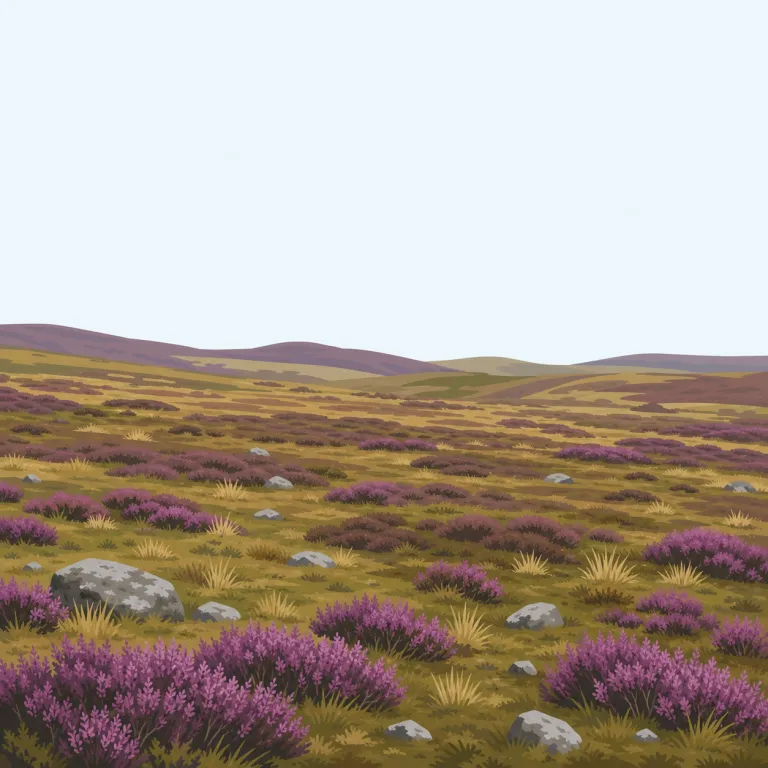
moor
moor は英検1級レベルの英単語で、「荒野、停泊させる」という意味があります。発音記号は /mʊr/ です。
意味一覧 (2件)
荒野
解説 Definition
moorとは、木がほとんど生えない広大な荒野や湿地帯を指す名詞で、特にイギリスのスコットランドやヨークシャーなどに見られる地形です。ヒースの低木やコケが生い茂り、霧がかかりやすい荒涼とした景観が特徴です。文学作品の舞台としても多く登場する、独特の雰囲気を持つ地形です。
A large open area of rough land, usually covered with grass or low plants and found in cool, wet regions. It is a landscape term that is especially common in British English. Moors are often wild, empty, and not heavily developed.
覚え方のコツ Memory Tip
moor は moorland の核になる語で、land が付けばそのまま『荒野地帯』。まず「木がほとんどなく、草やヒース、湿地が広がる寒々しい土地」という景色を一枚で思い浮かべると残りやすい。desert は乾いた砂漠、plain は単なる平原だが、moor は湿っぽく荒涼として霧や風が似合う。英文学では bleak moor, windswept moor のように、陰鬱で人里離れた舞台として出やすい。なお動詞 moor『船を係留する』は別語義なので、名詞の景色イメージと切り分けて覚えると混同しにくい。
Remember `moor` through `moorland`, which shows it is a kind of land. Picture a wild, empty place with grass, wind, mist, and very few trees. English books often use phrases like `bleak moor` or `windswept moor`, which give the word a strong mood.
例文
They walked across the misty moor as the sun began to set.
彼らは日が沈み始める中、霧のかかった荒野を歩いた。
The novel is set on a desolate moor in northern England.
その小説はイングランド北部の荒涼とした荒野を舞台としている。
Wild ponies roam freely across the ancient moor.
野生のポニーたちが古くからの荒野を自由に歩き回っている。
停泊させる
(意味 2)
解説 Definition
船またはボートをロープやアンカーで固定する。水上の特定の場所に長時間停泊させるために使われる。
To moor means to tie or fix a boat or ship in place so it stays in one position. It is commonly used in sailing and harbor contexts, usually with ropes, chains, or anchors.
覚え方のコツ Memory Tip
moor は mooring(係留)や unmoor(係留を解く)とセットで覚えると定着しやすい語です。核のイメージは「船をその場に固定する」。単に stop するのでなく、ロープやアンカーで動かないようにつなぐ感覚を持つとよいです。moor a boat / moor a ship の形で出やすく、dock は「波止場に着ける」、anchor は「錨を下ろす」に寄るのに対し、moor はもっと広く「しっかり係留する」。名詞の moor(荒野)とは別語なので混同注意。
Think of the core image: fixing a boat in place so it does not drift away. `Moor` is often learned with related words like `mooring` and `unmoor`, which makes the meaning stick better. Remember common patterns such as `moor a boat` or `moor a ship`.
例文
The captain decided to moor the boat in the sheltered harbor.
その船長は、風雨を避けられる港に船を停泊させることにした。
They managed to moor the ship safely despite the strong currents.
彼らは、強い潮流にもかかわらず、船を安全に停泊させることができた。
The fishing vessel was moored at the dock overnight.
その漁船は、一晩中、ドックに係留されていた。
moor の類義語・関連語
moor の語源・成り立ち Etymology
moor は古英語 mor「湿地・荒れ地」に由来するゲルマン系の語です。moorland や Scots の muir と同根で、木が育ちにくいじめじめした広野の景色が、そのまま「荒野」という意味に残っています。
Moor comes from Old English mor, a Germanic word for open, wet, uncultivated land. Related forms appear in other Germanic languages, such as Scots muir. The word kept the idea of a rough, treeless stretch of land, often damp or wild in character. A related English word is moorland.
同じレベルの語彙をもっと
英検1級の一覧へ →外部辞書で調べる
この英単語をクイズで覚えよう