モテット
解説 Definition
モテット;合唱曲。複数声部の宗教音楽。
A motet is a piece of vocal music, usually written for several singers and often connected with church or religious traditions. It is mainly used in classical music. The term is technical and appears in music history or performance contexts.
覚え方のコツ Memory Tip
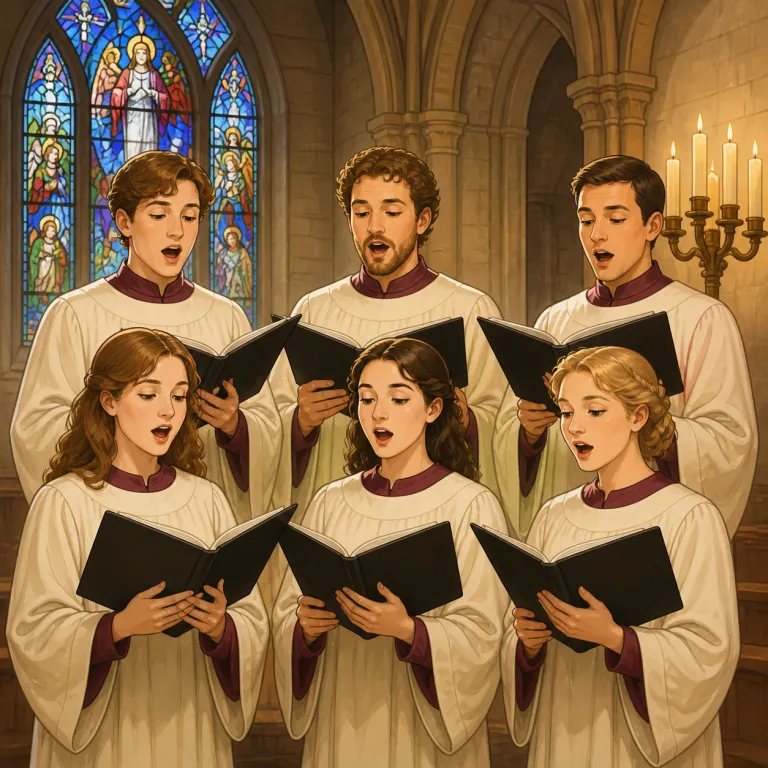
motet は「複数の声部が、それぞれ別の旋律線を歌いながら重なる宗教的な合唱曲」と音の層で覚えると定着しやすいです。語の中心に「言葉」の感覚があるため、器楽曲ではなく、典礼的・宗教的なテキストを声に載せる作品だと結び付けます。特に Renaissance motet、sacred motet、the motet’s complex counterpoint が頻出の組み合わせ。Mass がミサ通常文全体を構成する大規模な曲を指し得るのに対し、motet は独立した声楽作品名として現れることが多い、と押さえると混同しにくく、合唱団の各声部が対位法的に絡む場面も浮かびます。
Put this word in the box of serious church music. A `motet` is easier to remember if you connect it with a choir rather than one singer. It also helps to contrast it with `hymn` and `mass`, so it stays in its own music category.
例文
A motet is a type of vocal composition.
モテットは声楽作曲の一種である。
Renaissance motets are popular in concert halls.
ルネッサンスモテットはコンサートホールで人気がある。
The motet's complex counterpoint impresses listeners.
モテットの複雑な対位法は聴き手を感動させる。
motet の類義語・関連語
紛らわしい語
motet の語源・成り立ち Etymology
motet は古フランス語 motet と中世ラテン語 motetum にさかのぼり、核は mot「語・ことば」です。短い言葉句を旋律に載せる聖歌だった感覚が名に残り、motto や mot が同根だと分かると腑に落ちます。
Motet comes through Old French motet and Medieval Latin motetum. At its core is Old French mot, meaning "word," which is related to motto. The name reflects an early type of vocal music built around short words or verbal phrases set to melody.
同じレベルの語彙をもっと
外部辞書で調べる
この英単語をクイズで覚えよう