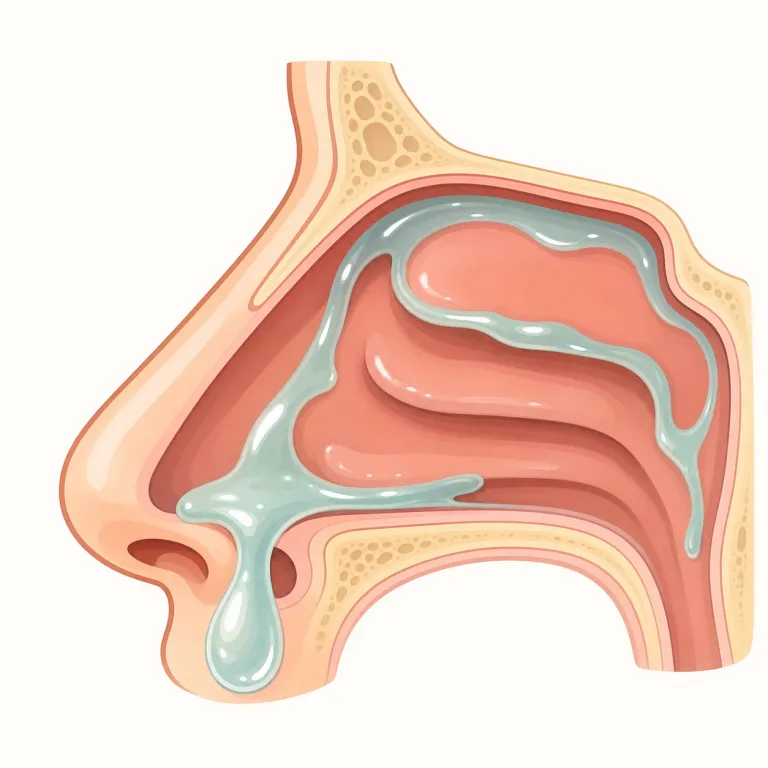
粘液
解説 Definition
体内の粘膜から分泌される粘り気のある液体で、保護や潤滑の役割を果たします。呼吸器や消化器系など様々な器官で産生されます。
Mucus is a thick, slippery substance produced inside the body. It helps protect and moisten areas such as the nose, throat, and lungs. The word is mostly used in medical or everyday health contexts.
覚え方のコツ Memory Tip
mucus は「ぬるっとした分泌物」をまとめて指す名詞。鼻水・たん・胃や腸を守る粘液まで、体の表面を保護する“ねばつく膜の材料”として一つに束ねて覚えると残りやすいです。mucous membrane(粘膜), mucous など muc- で始まる語を見たら「粘って覆う感じ」を連想すると定着します。特に紛らわしいのは mucous で、こちらは形容詞。「mucus = 物そのもの」「mucous = 粘液の・粘膜の」と品詞で切り分けると混同しにくいです。
Group it with other `muc-` words such as `mucous membrane`. The `muc-` part gives a sticky, covering feeling, which helps the word stay in memory. Also keep the grammar clear: `mucus` is the substance, while `mucous` is the adjective.
例文
The body produces mucus to protect the respiratory system.
体は呼吸器系を保護するために粘液を産生します。
When you have a cold, excess mucus makes it difficult to breathe.
風邪をひくと、過剰な粘液が呼吸を困難にします。
Mucus in the stomach helps protect it from acid damage.
胃の粘液は、胃を酸による損傷から守るのに役立ちます。
mucus の類義語・関連語
mucus の語源・成り立ち Etymology
mucus はラテン語 mucus「鼻水・ぬめり」がそのまま英語に入った語で、さらに印欧語根 *meu-「ぬめる・滑る」にさかのぼるとされます。mucous や mucilage と同根で、表面をぬるりと覆う感触がそのまま「粘液」の意味に残っています。
Mucus comes directly from Latin mucus, meaning nasal discharge or slime. It is thought to go back to an older Indo-European root connected with slipping or being slimy. The word kept that physical sense of a slippery substance covering a surface. Related words include mucous and mucilage.
同じレベルの語彙をもっと
外部辞書で調べる
この英単語をクイズで覚えよう