緊張
解説 Definition
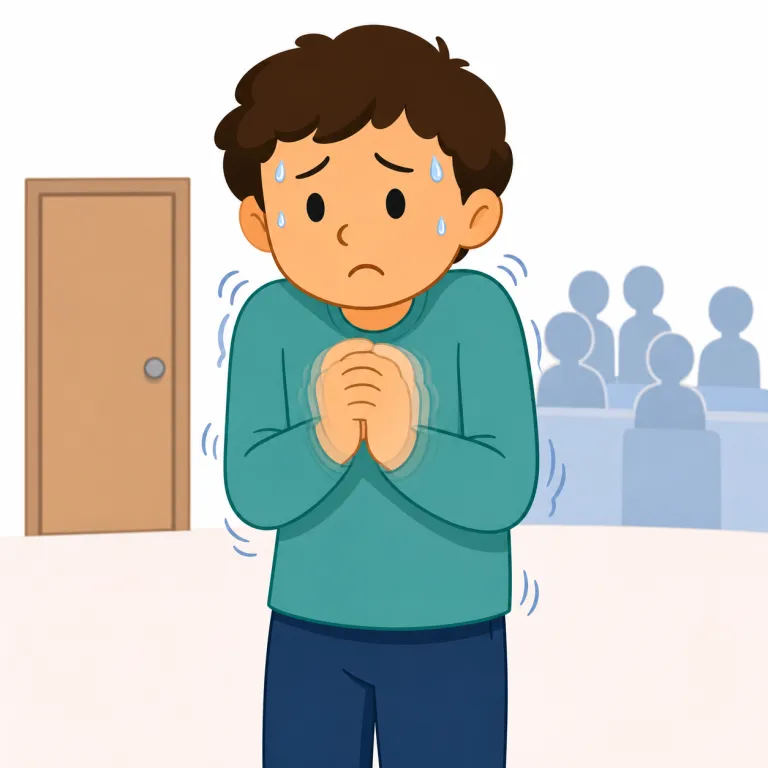
大事な場面の前などで、心臓が高鳴り、手足が震えるような不安やそわそわした気持ちです。自信が持てず、言葉が出にくかったり集中しづらかったりすることが多く、心身が落ち着かない状態を指します。こうした神経が過敏になっている様子を表す表現です。
Nervousness is the feeling of being worried, tense, or not fully calm. It is commonly used for situations like tests, interviews, public speaking, or meeting new people.
覚え方のコツ Memory Tip
nervous を知っていれば、「緊張している状態」にする接尾辞 -ness が付いた名詞だと押さえると覚えやすいです。中心には nerve「神経」の感覚があり、神経が張って落ち着かない様子を思い浮かべると定着します。使う場面は before an interview, before a speech など本番前が典型。anxiety よりも、その場でそわそわしたり手が震えたりする一時的な緊張感を表しやすい語です。
If you know nervous, just add -ness for the state or feeling. You can connect it to nerve, as if your nerves are too active before something important. It often fits moments like before a speech or an interview.
例文
She showed signs of nervousness before the exam.
彼女は試験前に緊張した様子を見せました。
His nervousness was visible in his shaking hands.
彼の手の震えに緊張が表れていました。
The nervousness in the room increased as the results were announced.
結果が発表されるにつれて、室内の緊張感が高まりました。
nervousness の類義語・関連語
nervousness の語源・成り立ち Etymology
nervousness は nervous「神経質な」+ -ness「状態」の形。nervous はラテン語 nervus「腱・神経」にさかのぼり、もともと「神経が張っている感じ」から今の「緊張・不安」の意味になりました。関連語に nerve, enervate があります。
Nervousness is formed from nervous plus the noun ending -ness. Nervous comes from Latin nervus, meaning sinew or nerve. The sense moved from physical nerves and tension in the body to the feeling of mental strain or anxiety; related words include nerve and enervate.
同じレベルの語彙をもっと
外部辞書で調べる
この英単語をクイズで覚えよう