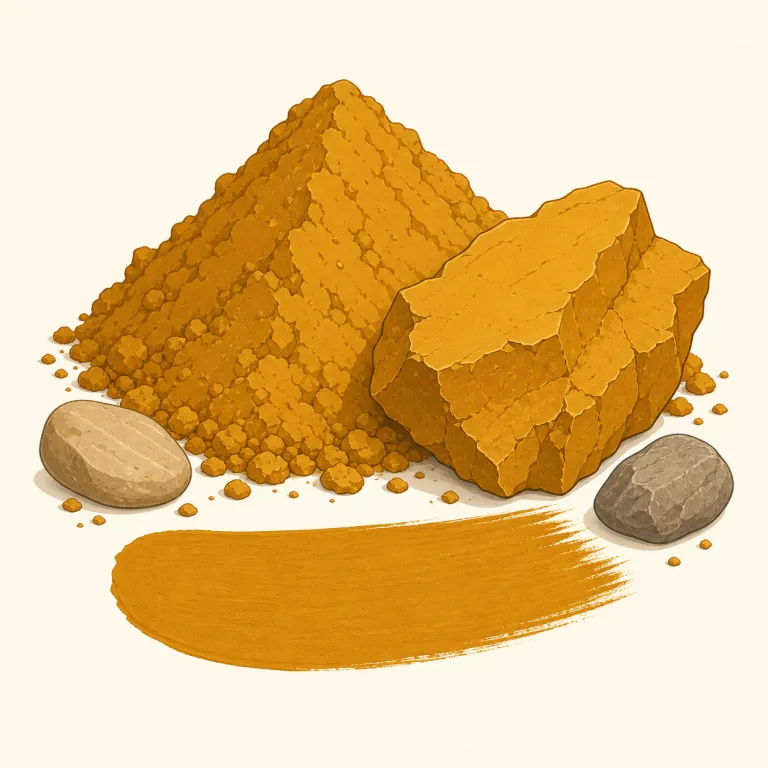
黄土、オーカー顔料
noun 名詞酸化鉄を含む天然の土、またはそれを原料とする黄色から褐色の顔料を指す。水や油などと混ぜて絵画や壁画、建材の着色に用いられ、抽象的に色合いだけを指す用法とは区別される。
黄土色。黄褐色。または茶色の色合い。
Ocher is a yellow, brown, or reddish earth color. It is often used in art, design, and descriptions of soil, stone, or natural pigments. The spelling "ochre" is also common, especially in British English.
色名として覚えるなら、まず英式つづりの ochre もセットで確認すると定着しやすい。ocher は bright yellow のような鮮やかな黄ではなく、土・岩・顔料にある、くすんだ黄褐色を指すことが多い。paint with ocher, ocher walls のように絵の具や自然素材の文脈で出やすいので、「人工的な黄色」ではなく「土っぽい黄色」と結びつけるのがコツ。orange より落ち着き、brown より黄みが強い中間色として置くと区別しやすい。
Remember `ocher` as a color word that often appears in art, paint, earth, and stone. It is not a bright yellow like `gold` or `lemon`; think of a more dusty, earthy yellow-brown. Also note the British spelling `ochre`, because both forms appear.
The ocher paint gave the room a warm feeling.
黄土色の塗料が部屋を温かい雰囲気にした。
Ancient civilizations used ocher pigments.
古代文明では黄土色の顔料が使われていた。
The artist mixed ocher with white to create a lighter shade.
画家は黄土色に白を混ぜて、より明るい色合いを作った。
文脈によって、次の意味でも使われます。
酸化鉄を含む天然の土、またはそれを原料とする黄色から褐色の顔料を指す。水や油などと混ぜて絵画や壁画、建材の着色に用いられ、抽象的に色合いだけを指す用法とは区別される。
ギリシャ語 ōchros(黄色い・青白い)からラテン語 ochra、古フランス語 ocre を経て英語に。天然顔料の黄土を指し、色名に転じた。関連語: ochre(英式綴り)、ocher yellow。古代から洞窟壁画に使われた黄色い土の色が、そのままギリシャ語の「黄色」に由来する。
Ocher came into English through Latin and Old French, from Greek ōkhra, a word for yellow ocher, related to ōkhrós, meaning "pale yellow." It first referred to the natural yellow earth pigment and later also to the color itself. The spelling ochre is also common, especially in British English. The word has kept its close link to the ancient yellow-brown earth used as pigment.
この英単語をクイズで覚えよう