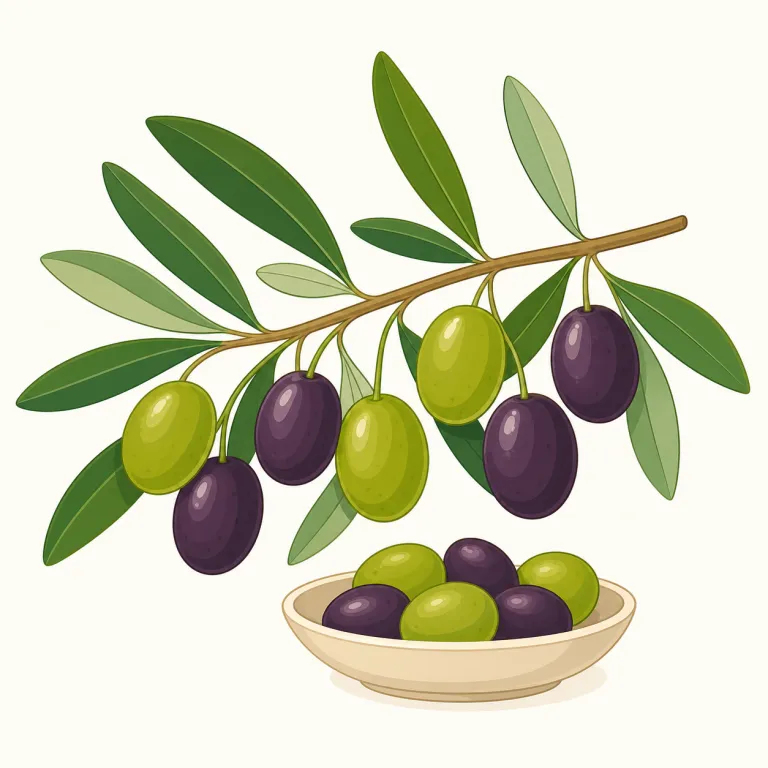
オリーブの木
noun 名詞オリーブの実をつける常緑樹を指します。地中海沿岸などの温暖で乾燥した地域で広く栽培され、果実や油を得るための農作物としてだけでなく、庭木としても利用されます。
油脂が豊富に含まれた果実です。緑と黒の両方の品種があり、そのまま食べたり、油を抽出したりして利用されます。地中海地域で主に栽培されています。
An olive is a small fruit that grows on olive trees and is commonly eaten as food. It is often green or black and is also used to make olive oil. The word can also describe a greenish color in some contexts.
olive はまず olive oil で結びつけると定着しやすい語です。oil を取る実、という典型的な使われ方を押さえると名詞としての中心像がぶれません。食べ物としての olive、色としての olive green、象徴としての olive branch まで一緒に覚えると関連づけが増えます。発音も oil とは別語なので混同せず、「地中海の実・油・枝」の3点セットで覚えると残りやすいです。
The easiest memory hook is `olive oil`. From there, connect the fruit, the oil, and the color `olive green` as one group. You can also add `olive branch`, which is a very common image in English.
We eat olives with bread and cheese.
私たちはオリーブをパンやチーズと一緒に食べます。
She adds olives to her salad for flavor.
彼女は風味を出すためにサラダにオリーブを加えます。
Black and green olives have different flavors.
黒オリーブと緑オリーブは味が違います。
文脈によって、次の意味でも使われます。
オリーブの実をつける常緑樹を指します。地中海沿岸などの温暖で乾燥した地域で広く栽培され、果実や油を得るための農作物としてだけでなく、庭木としても利用されます。
物の色では、黄みや茶色みを帯びたくすんだ緑色を表し、olive jacketのように使います。olive skinのように肌について使う場合は、緑色ではなく黄褐色を帯びた肌色を指します。
olive はラテン語 oliva にさかのぼり、さらにギリシャ語 elaia を経て英語に入った語です。果実名がそのまま木も表し、古くから地中海文化と結びついたため「平和」の連想も生みました。関連語に oil、oleic があります。
Olive came into English from Latin oliva, which was itself connected with Greek elaia. The name first referred to the fruit and then also to the tree that bears it. Because the olive tree was central in Mediterranean life, the word later gained strong cultural associations, including peace. Related words include oil and oleic.
この英単語をクイズで覚えよう