oneself
自分自身
解説 Definition
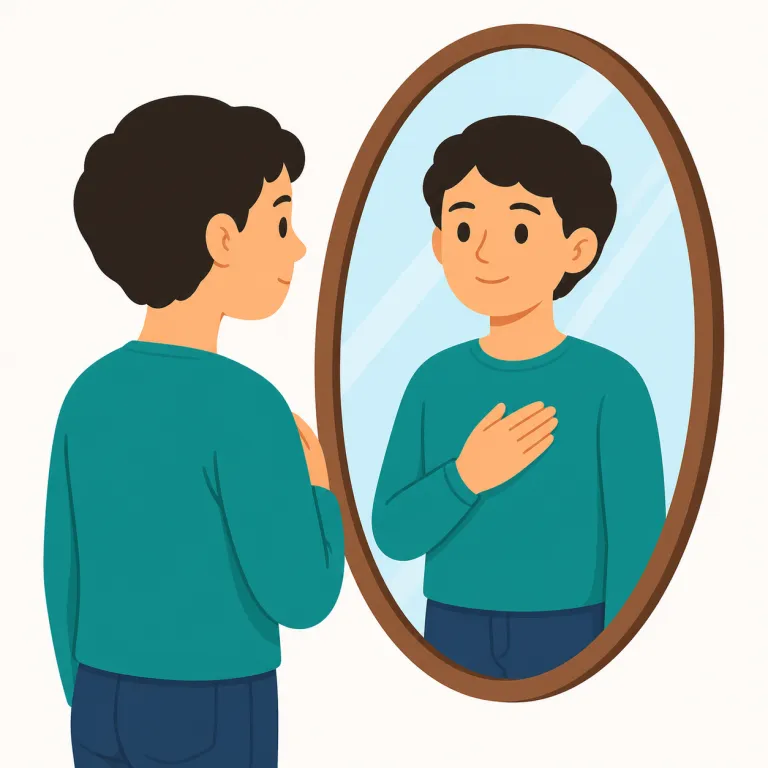
自分自身のこと。自分という存在そのもの。他の人ではなく、本人を指す。
Oneself means a person's own self and is used to refer back to the subject in a general way. It often appears in formal English when talking about people in general rather than one specific person. It is common in phrases about controlling, improving, or understanding one's own actions or mind.
覚え方のコツ Memory Tip
`one + self` で「一人の人そのもの」と見ると覚えやすいです。`myself / yourself / himself` などの `-self` 系と同じ仲間で、その文脈版が `oneself`。特定の「私」ではなく、一般論として「人は自分自身を〜する」の形でよく出ます。`for oneself` は「自分自身のために」、`by oneself` は「一人で」。`one` は「ある人・人一般」なので、個人名ではなく普遍的な言い方だと押さえると定着します。
Break it into `one + self`. It belongs to the same family as `myself`, `yourself`, and `himself`, but `oneself` is used for people in general, not one specific person. Fixed phrases like `by oneself` and `for oneself` are the easiest way to keep it in memory.
例文
One must believe in oneself to succeed.
成功するには自分自身を信じなければなりません。
It is easy to fool oneself.
自分自身を欺くのは簡単です。
One should judge oneself honestly.
人は自分自身を正直に評価するべきです。
oneself の類義語・関連語
紛らわしい語
oneself の語源・成り立ち Etymology
oneself は one「一人の人」+ self「自己」から成る代名詞で、古英語由来の要素どうしの結合です。もとは one's self と二語で、「その人自身の身」という強調表現だったため、今の「自分自身」という意味になりました。関連語は myself, herself。
Oneself is made from one and self, both from Old English roots. It was originally written as two words, one's self, and used for emphasis, meaning "that person himself or herself." Over time it became a fixed form meaning a person's own self, like myself or herself.
同じレベルの語彙をもっと
外部辞書で調べる
この英単語をクイズで覚えよう