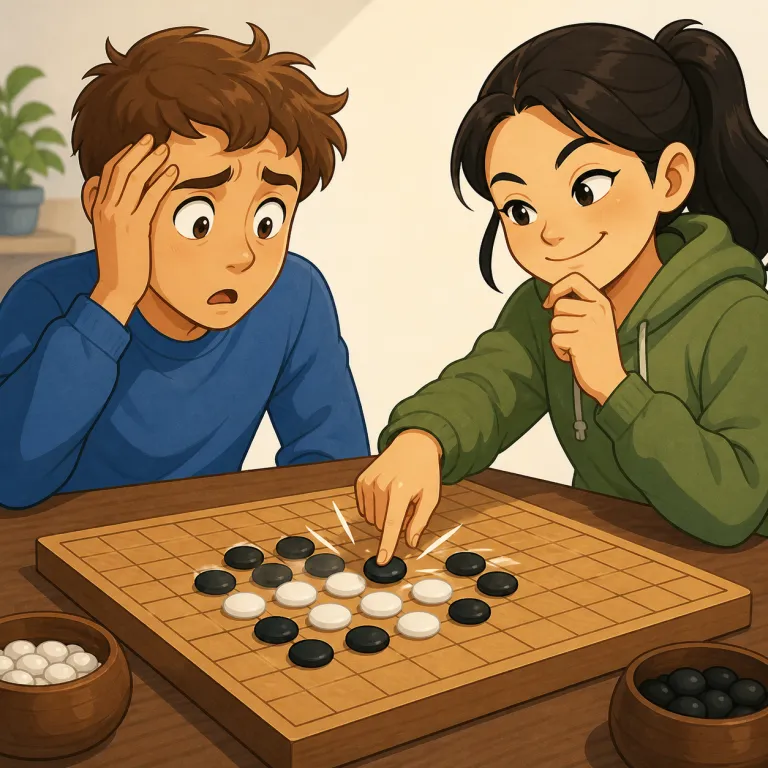
裏をかかれた
解説 Definition
誰かが自分を欺いたり、巧妙に出し抜かれたりした状態。計略にはめられた。
Outwitted means tricked or defeated by someone who was more clever. It is often used in stories, games, arguments, or competitive situations where smart thinking is important. Because it is a past form, it describes something that has already happened.
覚え方のコツ Memory Tip
out- は outrun, outnumber のように「相手を上回る・出し抜く」、wit は witty の wit で「機転・頭の回転」とつなぐと覚えると定着しやすいです。つまり outwitted は「だました」というより「頭脳戦で一枚上を行かれて、してやられた」感覚。tricked よりも、相手の計算や読みの鋭さが前に出る語です。チェス、交渉、推理物で be outwitted by a rival / by the police のような場面を思い浮かべると記憶に残ります。
Split it into `out-` + `wit`. If someone `outwits` you, they use better thinking and get ahead of you. Picture a detective or chess player being beaten by smarter strategy, not just by a simple trick.
例文
He felt outwitted when his plan was discovered by his opponent.
彼の計画が対戦相手に発見されたとき、彼は出し抜かれたと感じた。
The thief was outwitted by the detective's clever questioning.
泥棒は刑事の巧妙な質問で出し抜かれた。
The player was outwitted by his opponent's clever trap.
そのプレイヤーは対戦相手の巧妙な罠で出し抜かれた。
outwitted の類義語・関連語
派生語
outwitted の語源・成り立ち Etymology
outwitted は out-「出し抜いて」と wit「知恵」を合わせた語で、wit は古英語 witan「知る」に連なる語です。wise や wisdom と同根で、「知恵で相手より一歩先に出る」という像から、裏をかく・出し抜く意味がすっと見えてきます。
Outwitted is built from out- and wit. Wit comes from Old English and is related to a Germanic root meaning "to know," the same family as wise and wisdom. The idea is to use knowledge or cleverness to get ahead of someone, which led to the sense of defeating them by being smarter.
同じレベルの語彙をもっと
外部辞書で調べる
この英単語をクイズで覚えよう