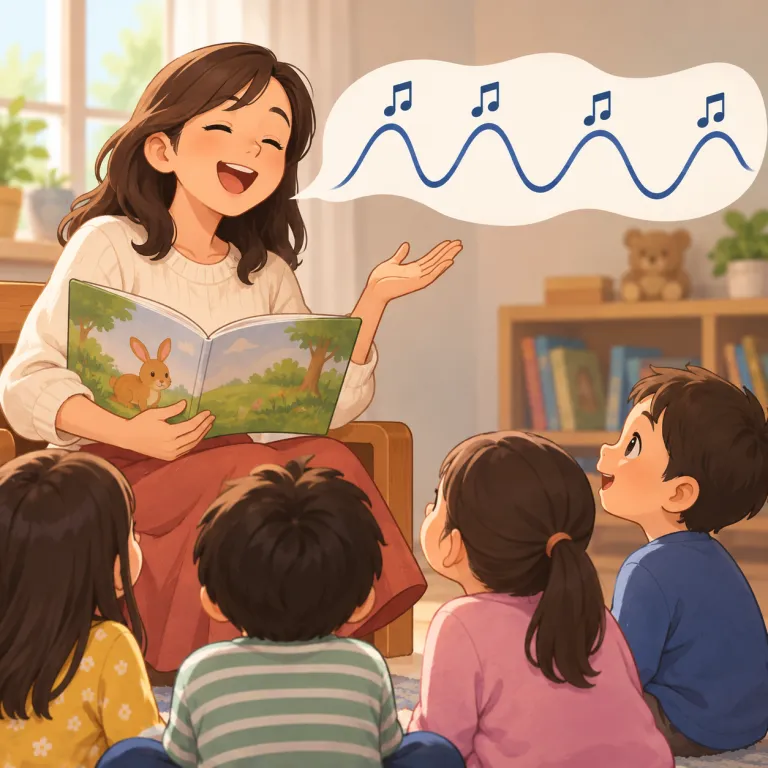
歌の集い、合唱会
noun 名詞主に英国で、人々が集まり、親しい雰囲気の中で次々に歌を歌う会を指します。通例はくだけた集まりで、声の抑揚や単調な調子を表す既存語義とは異なり、催し全体を意味します。
リズミカルで単調な話し方や歌い方。またはそうした単調な歌やメロディー。
A singsong is a voice or sound pattern with a repeated rise and fall in pitch. It can describe speech that sounds musical, childish, or too regular. The word is often used in a slightly negative way.
sing と song がそのまま並ぶので、『歌っぽさが前に出る言い方』をまず連想すると覚えやすい語。しかも同系の語を重ねた形なので、見た目自体が“同じ調子の反復”を感じさせる。ポイントは、上手に歌うことではなく、同じ調子が続いて内容より節回しが耳に残る感じ。よく in a singsong voice の形で、子どもが暗唱するときや、からかうように調子をつけて話す場面を思い浮かべると定着する。chant よりも会話の単調な抑揚に寄りやすい。
The word looks like `sing + song`, so let that guide your memory. It suggests speech that sounds too musical or repeated, as if the voice is following the same tune again and again. The phrase `in a singsong voice` is the best memory hook.
The children recited the rhyme in a singsong.
子どもたちは抑揚のある単調な調子でその童謡を唱えた。
Her speech had a rhythmic singsong that made it memorable.
彼女の話し方にはリズミカルで単調な調子があり、耳に残った。
He read each line in the same rising and falling singsong.
彼はどの行も同じように上がり下がりする単調な調子で読んだ。
文脈によって、次の意味でも使われます。
主に英国で、人々が集まり、親しい雰囲気の中で次々に歌を歌う会を指します。通例はくだけた集まりで、声の抑揚や単調な調子を表す既存語義とは異なり、催し全体を意味します。
singsong は古英語 singan「歌う」と song「歌」を重ねた英語本来の複合語で、どちらもゲルマン系の同根です。sing や singer と同じ核をあえて反復するので、内容より節回しが耳に残る、歌うような単調さがそのまま語形に出ています。
Singsong is a native English compound built from sing and song, which come from the same old Germanic root. Because it repeats closely related words, the form itself suggests a musical, chant-like effect. Over time it came to express the idea of a voice pattern that sounds repetitive or song-like.
この英単語をクイズで覚えよう